Generator Delivery: Where Transportation Ends and Installation Begins
Define the handoff among the seller, transporter, receiving crew and installer before the truck is scheduled.
CONFIDENCE IN EVERY MILE
A generator arriving at an address is not the same milestone as a generator being placed, connected and ready for use. Buyers can avoid a costly gap by describing the destination and handoff in plain language before booking transportation.
Define what “delivery” means in the quote
Does the quoted service end with the truck arriving at an agreed unloading area, or does it include a separately specified unloading service? Does anyone in the written scope undertake movement from that area to the final location? Ask those questions directly. Do not assume a transport quote includes lifting, final placement, electrical work or commissioning.
Assign the stages to named parties
| Stage | Responsibility to agree before dispatch |
|---|---|
| Release at origin | Who confirms the unit is ready, supplies specifications and authorizes collection? |
| Loading | Who provides the equipment, personnel and unit-specific handling plan? |
| Transportation | Which unit and loose components are included, and what access and timing are assumed? |
| Unloading | Who receives the truck and provides the agreed unloading arrangements? |
| Final placement | Who moves the unit from the receiving point to the intended position, if those differ? |
| Installation and startup | Which qualified contractor or authorized provider owns connections, checks and commissioning? |
Use the exact unit’s documentation
Supply the manufacturer’s model-specific dimensions, weight and handling documentation, together with the enclosure, base or skid configuration and any separate components. Have the qualified loading and receiving teams review the applicable instructions. This article does not provide lifting directions or establish that a particular crane, forklift or trailer is suitable.
Make the receiving appointment workable
Confirm gate access, check-in instructions, receiving hours, the unloading area and the contact who can resolve a problem. Establish how the transporter will notify the receiving team of a changed arrival estimate. Ask what happens if the receiving crew is unavailable or the unit cannot be accepted.
Schedule dependent work around confirmed coordination rather than treating an estimated delivery date as a guarantee. Keep any waiting allowances, rescheduling terms and approval responsibilities visible in the written agreement.
A simple handoff example
A buyer tells a transporter “deliver the generator to the project.” The installer expects the generator on its final base, while the transport arrangement only covers arrival at the unloading area. The missing step is not solved by an address. The buyer needs a named party, agreed scope and timing for unloading and movement to the final position before dispatch.
Keep transport and installation scope clear
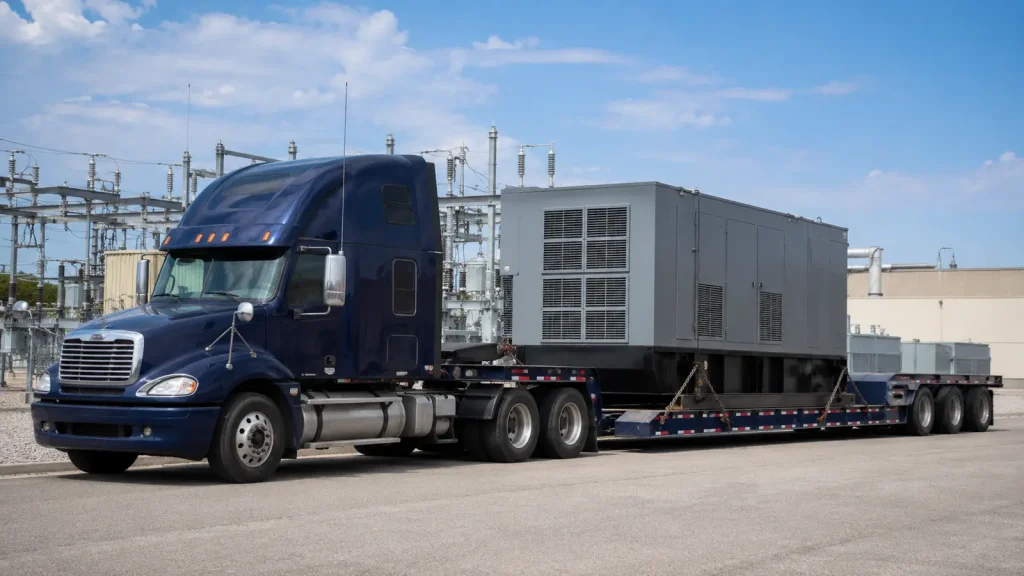
ETS coordinates qualifying industrial generator transport. Installation, final placement or specialized handling should never be assumed included unless explicitly confirmed in the applicable written scope. For related facility shipments, review data-center equipment transport planning. Use the quote cost calculator to compare confirmed transport and separately priced required costs without counting an included charge twice.
Share this resource
You may share a link to this resource or quote a short excerpt with attribution to Elevation Transport Services. Please link to this original page so readers can find the current version.
Prepared by Elevation Transport Services. Updated October 2, 2026.