By Jay Mays, Managing Partner, Elevation Transport Services
You can arrange interstate shipping for an electric car purchased from a dealer or private seller. Before dispatch, confirm that the seller has released the vehicle, the carrier has working vehicle access, the battery is prepared to the agreed requirements, and the loading method follows the exact model’s manufacturer instructions. The right plan depends on the vehicle’s condition, size, route and pickup location—not simply the fact that it is electric.
This guide is for buyers arranging transport of an intact electric vehicle. A vehicle with suspected battery damage, flood exposure or unresolved safety warnings needs a separate review before routine transport is accepted.
Why this is a timely question for EV buyers
In its EV Market Monitor published October 16, 2026, Cox Automotive estimated September used-EV sales at 47,862 vehicles, up 21.2% from a year earlier. For buyers comparing vehicles beyond their local dealerships, planning the handoff before pickup helps keep the purchase and transportation arrangements aligned.
If you find the right car outside your local market, treat transportation as part of the purchase plan. A completed payment does not automatically mean the vehicle, keys and pickup paperwork are ready for a driver.
What should you confirm with the seller before booking pickup?
Get the VIN, exact year, make, model and trim, seller’s address, release contact and pickup hours. Confirm whether the vehicle starts, shifts, rolls, steers and brakes normally. Tell the coordinator about reduced ground clearance, suspension modifications, oversized wheels or other changes that could affect loading.
- Release: Has the seller cleared payment and authorized collection? Ask what pickup documents and driver details are required.
- Access: Which working key, fob or key card will be handed to the driver?
- Charge: What charge level is showing, who will prepare it, and what does the assigned carrier require?
- Condition: Are there warning messages, charging problems, collision damage or a history of flood exposure?
- Timing: When is the car actually available, and are there storage deadlines or appointment restrictions?
Our online vehicle purchase shipping service covers seller-to-buyer coordination. The EV-specific checks below add the access and handling details that a general purchase checklist can miss.
How much battery charge does an EV need for shipping?
Confirm the preparation requirement with the assigned carrier and check the owner’s manual for your exact vehicle. Do not assume one percentage applies to every EV, carrier or transport method. Tell the coordinator the current charge level before pickup so any preparation can be agreed with the seller.
The vehicle needs to be ready for the planned loading and unloading process. Ask whether charging is included anywhere in the agreed service; do not assume an auto carrier provides charging in transit. If the vehicle has a charging fault or cannot power up, disclose that before equipment is assigned.
Also ask the seller to review parked features and scheduled functions under the manufacturer’s instructions. Document the charge reading at handoff. That record describes the pickup condition; it is not a promise that the displayed percentage will be unchanged at delivery.
Can the driver use only my phone key?
Agree on independent, working vehicle access before dispatch. Your phone being connected to the car does not establish that a driver can unlock, start and move it without you. Have the seller demonstrate the key card or fob that will travel with the vehicle, and confirm the driver receives the instructions needed to operate it.
For a recently purchased EV, coordinate ownership and app-transfer questions with the seller or manufacturer separately. Do not send account passwords to a driver. If an operating PIN or special procedure affects loading, arrange an appropriate handoff directly with the coordinator rather than discovering it at the pickup gate.
Does an electric car need a special trailer or Tow Mode?
Confirm the transport equipment and loading method for the exact vehicle. Open versus enclosed transport is a separate choice based on protection preferences, clearance, vehicle configuration and the proposed equipment. Electric power alone does not settle that choice.
Manufacturer instructions matter. For example, Tesla’s transporter instructions for the 2020–2024 Model Y require all four tires off the ground during transport and describe Tow Mode as a limited loading or repositioning function. It should not be treated as a setting to leave enabled throughout a cross-country shipment. Other models and model years may have different instructions; provide the applicable manual to the transport team.
A carrier should review loading clearance, the vehicle’s actual configuration and the manufacturer’s handling instructions before pickup. Do not attempt a winching, battery or recovery procedure based on a general blog checklist.
What if the EV will not start or has a battery warning?
Report the symptoms and any known damage before booking it as an operable vehicle. “It has charge” is not the same as “it can be safely loaded.” Low-voltage power, access, parking-brake release and vehicle condition can affect the loading plan.
If there is suspected high-voltage battery damage, flood exposure or a safety warning, ask the seller to obtain an appropriate professional assessment and share that information with the coordinator. Routine intact-vehicle transport should not be assumed suitable. Our non-running vehicle transport page explains the condition information needed for an initial review; acceptance and equipment still require confirmation for the particular EV.
How do you prepare for delivery?
Name an authorized receiver who can meet the carrier, inspect the car and receive its keys. Confirm truck access before choosing the handoff location. A residential address may need an agreed nearby meeting point if the carrier cannot safely or legally enter.
At delivery, compare the vehicle with the pickup condition record and document any visible exceptions on the delivery paperwork before signing. Check that the agreed keys and listed accessories are present. Have a charging plan for after delivery and confirm which charging cable or adapters were actually included in the sale.
What determines the price to ship an electric car?
A shipment-specific quote needs the route, vehicle model and configuration, condition, requested timing, access details and open or enclosed preference. Do not assume every EV costs the same or that it automatically carries a fixed surcharge. Request the total scope in writing and identify anything that still requires verification.
Request an EV transport review
Elevation Transport Services coordinates nationwide vehicle transportation, including purchases from out-of-state dealers and private sellers. For delivery to Boca Raton or elsewhere in South Florida, include any community or receiving-location access restrictions with your request.
Request a vehicle transport quote with the year, make, model, pickup and delivery ZIP codes, available dates, current condition and preferred transport method. Tell us it is an electric vehicle and flag any access, charge or loading questions before dispatch.
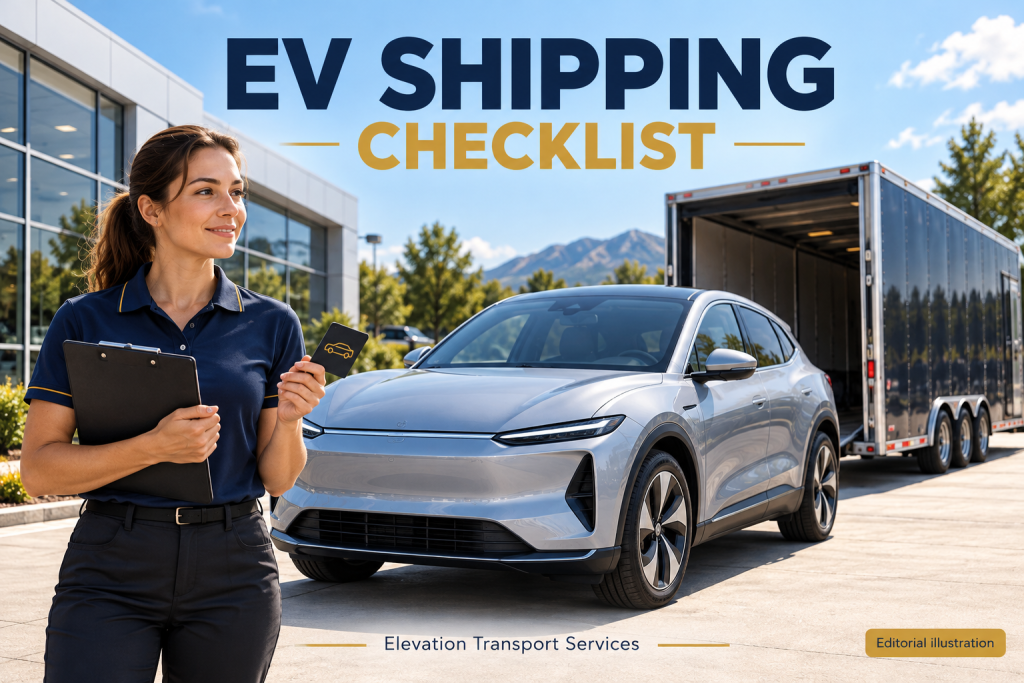
Sources reviewed October 31, 2026. Follow the applicable manufacturer instructions and confirmed carrier requirements for the specific vehicle. Featured image is an AI-generated editorial illustration, not a photograph of a completed ETS shipment.