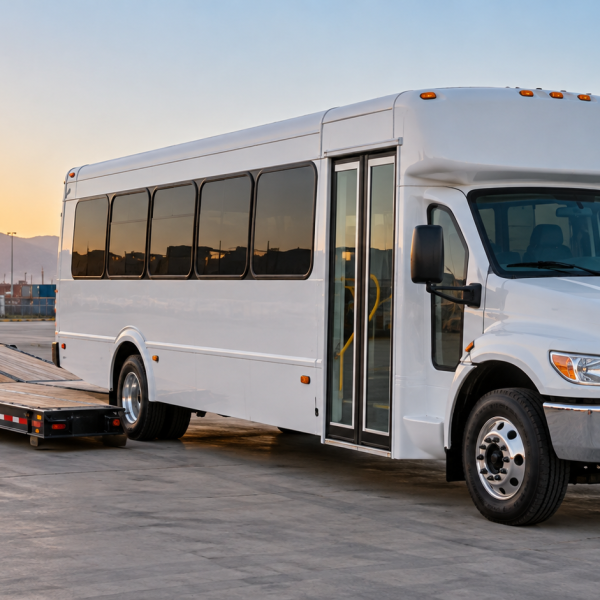
Commercial bus transport should be planned around the actual bus, its operating condition and the facilities at each end. A motorcoach, school bus and cutaway shuttle can need different trailers and loading arrangements even when they travel the same route.
How Can a Commercial Bus Be Moved Long Distance?
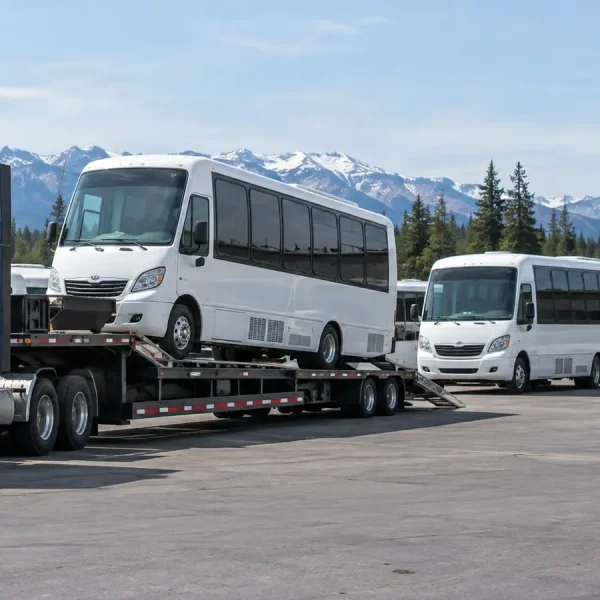
Trailer transport carries the bus instead of adding the route’s driving mileage to it. A suitable carrier may evaluate a specialized trailer, step deck, lowboy or RGN according to dimensions, weight, ground clearance and loading access. The model name alone is not enough to select equipment.
Driveaway is a separate option when the bus’s condition, documentation, customer requirements and route allow it. Compare its responsibilities and added mileage with trailer transport before choosing a method.
What Information Does the Transport Coordinator Need?
- Year, make, model, VIN or fleet unit number.
- Actual overall length, width, height and weight.
- Whether the bus starts, rolls, steers and brakes.
- Ground clearance, overhangs and installed accessories.
- Pickup and delivery addresses, contacts and facility hours.
- Release documents, appointment requirements and available loading support.
Send current photographs, especially for modified, damaged or non-running units. Our motorcoach measurement guide explains the dimensions that help trailer planning.
Can a Non-Running Bus Be Shipped?
It may be possible when a workable loading and unloading plan is confirmed. Report flat tires, locked wheels, damaged steering, suspension problems and any inability to release the brakes. Winching, towing, lifting or other assistance must be evaluated for the specific vehicle and location before dispatch.
How Should Several Buses Be Organized?
Use a unit-level manifest rather than assuming every bus has the same dimensions or condition. Identify each unit’s origin, destination, release status and required order of movement. Separate ready units from those awaiting repair, documents or loading assistance.
Several buses can be coordinated as one project without fitting on one trailer. Available deck space, weight distribution, loading sequence and route determine the transport plan.
What Should Happen at Pickup and Delivery?
Arrange authorized contacts to review the vehicle, keys and transport paperwork. Photograph visible condition and record discrepancies at the handoff. Confirm the receiving site has room for the selected trailer and any required unloading support.
Pickup and delivery dates remain estimates unless a specific arrangement is confirmed in writing. Transport does not automatically include repairs, commissioning or return-to-service work.
Request a Bus or Fleet Transport Review
Elevation Transport Services coordinates commercial bus and fleet transport nationwide. Start with the vehicle list, route, dimensions, condition and release requirements. For a purchase, review our bus dealer and auction transport service.
Plan Your Shipment With Elevation Transport Services
Send the vehicle or equipment details, pickup and delivery locations, operating condition and preferred timing. Our team will review the shipment and provide a tailored quote.
Request a transport quote or call (800) 251-9024. Customer service is available Monday–Saturday, 9 a.m.–9 p.m. Eastern Time.