


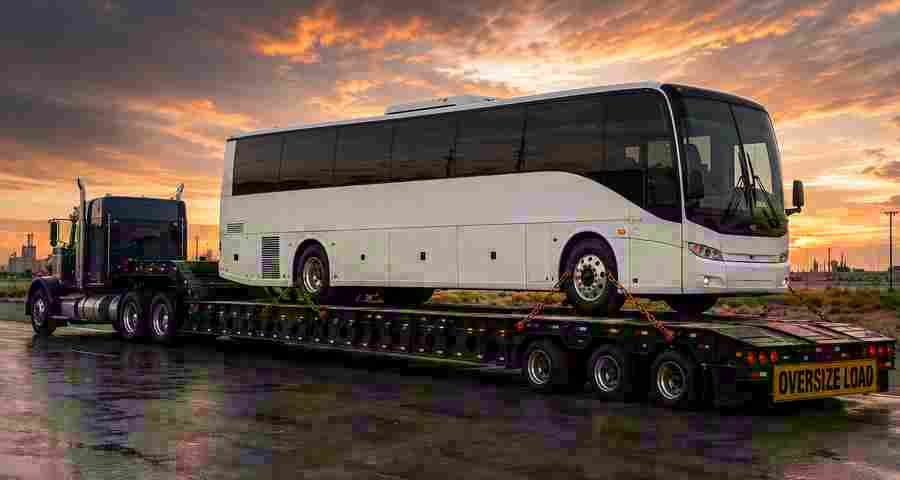
Shuttle bus transport can involve anything from a compact airport or hotel shuttle built on a commercial van chassis to a larger cutaway bus with wheelchair equipment, rooftop air conditioning, luggage storage, or specialty passenger systems. The right shipping plan depends on the exact vehicle dimensions, weight, condition, route, and whether the move involves one bus or an entire fleet.
Elevation Transport Services coordinates commercial bus and fleet vehicle transport nationwide for shuttle operators, hotels, airports, schools, churches, senior-living organizations, dealerships, municipalities, fleet managers, and commercial buyers. This guide explains how shuttle buses are moved, what affects the quote, and what information helps prevent delays or equipment changes.
What Types of Shuttle Buses Can Be Transported?
Shuttle buses vary widely in size and configuration. Common shipments include:
- Airport and parking-facility shuttle buses
- Hotel and resort shuttles
- Senior-living and assisted-transport buses
- Church, nonprofit, and campus shuttle buses
- Cutaway buses built on Ford, Chevrolet, GMC, Ram, Mercedes-Benz, or similar commercial chassis
- Wheelchair-accessible shuttle buses
- Executive and luxury shuttle vehicles
- Passenger vans and small commercial fleet vehicles moving with larger bus orders
The body conversion matters as much as the chassis. Rooftop air-conditioning units, raised roofs, wheelchair lifts, luggage compartments, exterior storage, running boards, and aftermarket equipment can change the total shipping profile.
Information Needed for a Shuttle Bus Shipping Quote
A reliable quote starts with the bus as it will actually appear at pickup. Provide:
- Year, make, model, body manufacturer, and passenger capacity
- Overall length, width, and height
- Current curb or operating weight when available
- Wheelbase and ground clearance
- Whether the bus starts, steers, brakes, and drives normally
- Photos from every side, including the roof line and front/rear overhangs
- Pickup and delivery addresses, hours, gate restrictions, and staging space
- Whether the shipment is one bus or part of a multi-unit fleet move
- The requested pickup window and any delivery deadline
For a fleet move, include a unit list or spreadsheet with VINs, year/make/model, pickup location, delivery location, operating condition, and a contact person for each facility. That allows the transportation plan to be built around the whole project instead of treating every vehicle as an unrelated one-off shipment.
Which Trailer Is Used for Shuttle Bus Transport?
Trailer selection depends on loaded height, weight, length, approach angle, and loading access.
Step deck
A step deck can be a practical option for many cutaway and medium-size shuttle buses because the lower main deck helps control total loaded height. The bus still has to fit the deck length and weight limits, and the loading method must be suitable for its ground clearance.
Lowboy or RGN
A lowboy or removable-gooseneck trailer may be selected for taller, heavier, or lower-clearance shuttle buses. An RGN can provide ground-level loading access when the bus can safely drive or be winched onto the deck.
Flatbed
A flatbed may work for smaller, lower-profile commercial vehicles, but the higher deck can make overall height a concern. It is not automatically the least expensive choice once loaded height and loading access are considered.
Driveaway
Some roadworthy shuttle buses may be candidates for driveaway service when the vehicle, route, registration, insurance arrangements, tires, brakes, and mechanical condition are suitable. Trailer transport is often preferred when the customer wants to avoid mileage, the bus has uncertain mechanical condition, or the unit is being sold, refurbished, or delivered as fleet inventory.
What Affects Shuttle Bus Transport Cost?
There is no accurate one-price-per-mile formula for shuttle buses. The quote is affected by:
- Distance and lane: major freight corridors generally offer more carrier options than remote pickup or delivery locations.
- Bus size and weight: taller or heavier buses may require lower-profile or higher-capacity equipment.
- Operating condition: a non-running bus may need winching, tow assistance, or special loading arrangements.
- Loaded dimensions: the combined bus-and-trailer profile determines whether additional route planning or permits may be required.
- Timing: flexible pickup windows generally create more equipment options than urgent fixed-date requests.
- Site access: airports, hotels, parking structures, schools, and private facilities can have security rules, narrow entrances, or limited staging space.
- Fleet volume: several units moving together may allow a coordinated plan that is more efficient than separate last-minute shipments.
For broader budgeting considerations, see our commercial bus transport cost guide.
Multi-Shuttle Fleet Coordination
The highest-value shuttle projects often involve several vehicles moving between a dealer, auction, fleet yard, airport, hotel group, church organization, or operating company. Fleet coordination is different from booking one bus.
A practical fleet plan can include:
- A master unit list with VIN and vehicle details
- Pickup sequencing by location and readiness
- Multiple trucks or staggered truck arrivals when necessary
- Central communication with one fleet contact
- Delivery appointments and receiving-yard coordination
- Consistent photo and condition documentation
- Status reporting across the entire group of vehicles
When five, ten, or more vehicles are involved, the goal is not simply to find a truck for each unit. The goal is to create a controlled schedule that keeps the fleet manager from coordinating multiple unrelated carriers and conflicting arrival windows.
Preparing a Shuttle Bus for Pickup
- Remove or secure loose items that are not intended to remain in the passenger area during highway transport.
- Close and latch doors, storage compartments, wheelchair equipment, windows, and exterior access panels.
- Confirm tire condition, steering, brakes, and battery condition if the bus will self-load.
- Disclose leaks, warning lights, mechanical problems, low ground clearance, or damaged body components before dispatch.
- Provide keys and any instructions needed to release air brakes, disable alarms, or operate specialty equipment.
- Confirm that the pickup and delivery sites have enough room for the assigned trailer to enter, turn, load, and exit safely.
Who Uses Shuttle Bus Transport?
Typical customers include airport shuttle companies, hotel groups, parking operators, retirement communities, churches, schools, universities, vehicle dealers, bus manufacturers, rental fleets, municipalities, transportation contractors, and companies replacing or relocating passenger fleets.
These customers often care about more than the lowest rate. Equipment suitability, scheduling, communication, access planning, and the ability to coordinate several units can be more important than shaving a small amount from one individual shipment.
Get a Shuttle Bus or Fleet Transport Quote
For the fastest planning, send the number of buses, year/make/model, dimensions if available, operating condition, pickup and delivery locations, and your preferred timing. For multi-unit moves, a vehicle list can be reviewed as one fleet project.
Request a commercial bus or shuttle fleet transport quote from Elevation Transport Services.
Planning a shuttle bus shipment? Review our Shuttle Bus Transport service or use the quote form below for a route- and vehicle-specific review.
What Transport Method Fits a Shuttle Bus?
Cutaway and smaller shuttle buses may fit specialized flatbed or step-deck arrangements, while taller or heavier buses may need lower-deck equipment. Exact height, length, weight, wheelbase, ground clearance, and operating condition should be reviewed before selecting the method.