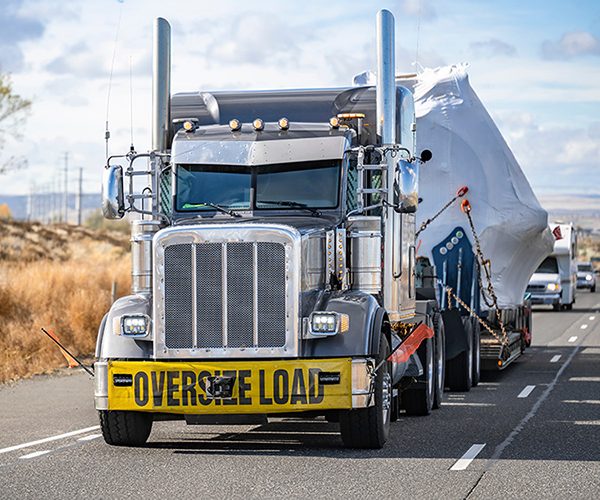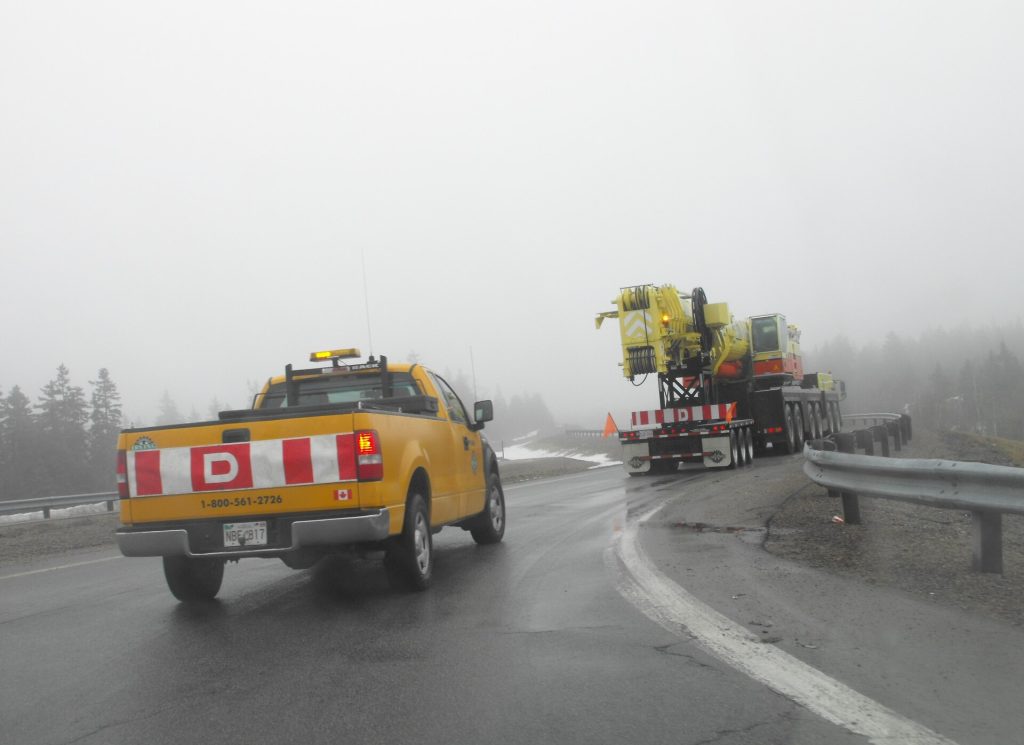
Successful oversize load route planning begins well before a truck arrives at the pickup site. The shipment must be defined accurately, matched to suitable trailer equipment, reviewed against route restrictions, and coordinated with the permit and escort requirements that apply along the way.
This process matters for industrial machinery, energy components, construction equipment, plant relocations, large fabricated structures, and other freight that exceeds ordinary legal dimensions or weight limits. A small error in the stated height, loading method, or site access can change the trailer requirement, approved route, permit conditions, and total transport schedule.
The checklist below explains what shippers, contractors, manufacturers, dealers, and project managers should prepare before requesting an oversize or heavy-haul quote.
1. Verify the Exact Loaded Dimensions
Route planning should be based on the complete loaded combination, not only the equipment or cargo itself. The transport team needs accurate information for the freight, trailer, securement arrangement, and any removable components.
Provide these shipment details:
- Overall cargo length, width, and height
- Accurate operating or shipping weight
- Manufacturer, model, and serial information when available
- Photos from every side
- Ground clearance and loading points
- Whether the unit runs, steers, and brakes
- Any attachments, counterweights, booms, buckets, blades, or accessories
- Whether components can be removed to reduce the transport profile
Do not rely only on a sales listing or general manufacturer specifications. Added attachments, tire changes, modifications, stored material, and aftermarket components can affect the actual shipping dimensions.
2. Select the Trailer Before Finalizing the Route
The route and trailer must be planned together. A lower deck may reduce overall loaded height, while an extendable trailer may be needed for long freight. The loading method can also determine whether a removable gooseneck, lowboy, step deck, flatbed, or other specialized configuration is appropriate.
For a detailed comparison, review our RGN, lowboy, and step-deck trailer guide. You can also learn more about our broader heavy equipment and specialized transport services.
Trailer selection may depend on:
- Total cargo weight and axle-distribution requirements
- Loaded height after the freight is placed on the deck
- Whether the equipment can drive onto the trailer
- Crane, forklift, or rigging availability at each site
- Length, overhang, and turning-radius requirements
- Deck strength, concentrated loading, and securement points
3. Identify Every Jurisdiction on the Planned Movement
Oversize and overweight permits are generally handled by state and local authorities rather than through one nationwide permit. Requirements can change when a shipment crosses a state line, enters a city, uses a toll facility, travels through a port, or leaves the state highway system.
The Federal Highway Administration explains that the federal government does not issue oversize or overweight vehicle permits; permitting is handled by the states. Local authorization may also be required when a state permit does not cover municipal roads. For an official overview, see the FHWA oversize and overweight permit information.
A transport plan should therefore identify the complete pickup and delivery route, including private roads, industrial parks, ports, construction sites, and the final approach to the loading area.
4. Review Route Restrictions and Clearance Risks
The shortest route is not always the legal or practical route. Oversize freight may need to avoid low bridges, restricted structures, narrow lanes, weight-limited roads, sharp turns, construction zones, railroad crossings, utility lines, and areas with limited shoulder space.
A route review may consider:
- Bridge and overhead clearances
- Posted bridge or roadway weight restrictions
- Lane width and shoulder conditions
- Construction closures and temporary restrictions
- Roundabouts, medians, curbs, and tight intersections
- Railroad-crossing approach angles
- Seasonal, weather, or time-of-day restrictions
- Safe staging and stopping locations
Complex shipments may require a formal route survey. When height is a major concern, the survey may include additional clearance review and coordination before the permitted movement begins.
5. Determine Permit and Escort Requirements
Permit conditions are based on the loaded configuration, route, and jurisdiction. Depending on the shipment, the permit may specify approved roads, travel hours, lighting, banners, flags, speed limitations, pilot vehicles, or other operating conditions.
Pilot-car and law-enforcement escort requirements are not uniform nationwide. The number and position of escorts can vary according to width, height, length, route, traffic conditions, and the rules of each jurisdiction. Permit instructions should be reviewed before dispatch so the necessary escort resources can be scheduled without delaying the truck.
6. Confirm Pickup and Delivery Site Access
A legal highway route does not guarantee that the truck can enter the loading or delivery property. Specialized trailers need room to turn, align, lower decks, detach goosenecks, deploy ramps, and exit after loading.
Site-access questions to answer:
- Is the entrance wide enough for the tractor and trailer?
- Are there gates, guardhouses, low branches, wires, or signs near the entrance?
- Is the ground level, firm, and suitable for loading?
- Is there enough turning and backing space?
- Are appointments, safety orientations, or personal protective equipment required?
- Will a crane, forklift, rigger, mechanic, or operator be present?
- Can the site safely accommodate an early or delayed arrival?
Photos, satellite views, entrance measurements, and an on-site contact are valuable, but they should not replace direct confirmation when access is tight or the project site is changing rapidly.
7. Coordinate Loading, Securement, and Disassembly
The freight should be ready when the permitted truck arrives. Delays can occur when attachments are still installed, fluids or loose materials have not been addressed, lifting equipment is unavailable, or the unit cannot be operated as expected.
For machinery shipments, confirm who is responsible for starting, steering, loading, unloading, disassembly, and reassembly. Securement must be based on the actual cargo, trailer, and manufacturer-approved tie-down locations when applicable.
Customers shipping construction machinery may also find our construction equipment transport guide useful.
8. Build Realistic Time Into the Project Schedule
Oversize transport requires more preparation than ordinary freight. Permit processing, route review, escort availability, weather, construction activity, equipment availability, and site readiness can all affect the timeline.
Project managers should avoid tying critical installation work to an assumed arrival time before the route, permits, trailer, and loading plan are confirmed. Pickup and delivery timing should be treated as coordinated estimates because road and operating conditions can change during transport.
9. Request a Quote With Complete Information
A useful quote depends on useful shipment details. Incomplete information can result in a trailer change, revised permit requirements, added escort needs, or a new route review after planning has already started.
Send the following with your quote request:
- Exact pickup and delivery addresses
- Commodity or equipment description
- Verified dimensions and weight
- Current photographs
- Loading and unloading method
- Operating condition
- Requested pickup window
- Site contacts and access restrictions
- Any known project, port, union, or appointment requirements
For heavy equipment and oversize freight, visit our heavy equipment transport page. For planning context on trailer choice and equipment costs, see our articles on lowboy versus RGN trailers and heavy equipment transport cost factors.
Frequently Asked Questions About Oversize Load Route Planning
Who obtains oversize-load permits?
The responsible carrier typically obtains the permits required for the permitted vehicle movement. The shipper should provide accurate dimensions, weight, locations, and cargo information so the permit applications and route review can be completed correctly.
Does every oversize load require a pilot car?
No. Escort requirements depend on the load dimensions, route, permit conditions, and jurisdiction. Some movements may need one or more pilot vehicles, while more complex loads may require additional coordination or law-enforcement escorts.
Can an oversize load travel on any interstate highway?
No. The approved route depends on the permit, loaded dimensions, weight, roadway restrictions, bridge clearances, construction activity, and other conditions. The most direct interstate route may not be the authorized route.
Why are exact dimensions needed before quoting?
Width, height, length, and weight affect trailer selection, permit requirements, escorts, route feasibility, and pricing. Even a small dimensional change can alter the transport plan.
How early should a project shipment be planned?
Planning should begin as soon as the cargo specifications, origin, destination, and expected readiness date are known. Larger or more complex loads generally require more time for equipment sourcing, route review, permits, escorts, and site coordination.
Request an Oversize or Specialized Transport Quote
Elevation Transport Services coordinates nationwide heavy haul, specialized freight, industrial machinery, and specialized transport based on the actual requirements of each shipment. Send complete dimensions, weight, photos, addresses, and loading details so the correct equipment and planning requirements can be reviewed.
Request a free transport quote or contact Elevation Transport Services to discuss your next oversize or specialized shipment.
nn
For larger or specialized moves, see our oversize load transport service for nationwide planning and coordination.
What Must Be Checked Before an Oversize Load Is Dispatched?
Before dispatch, the loaded width, height, length, weight, route, bridge and overhead clearances, state permit rules, travel-hour restrictions, escort requirements, and pickup and delivery access should be reviewed. Oversize planning is route-specific, so a load that works on one lane may require a different plan on another.