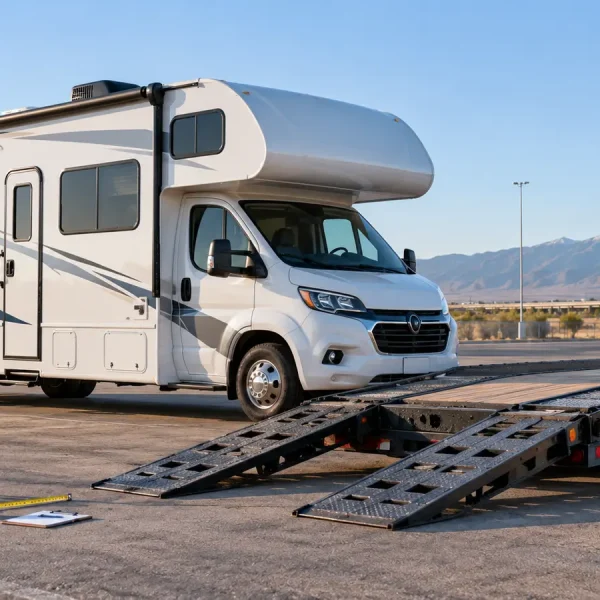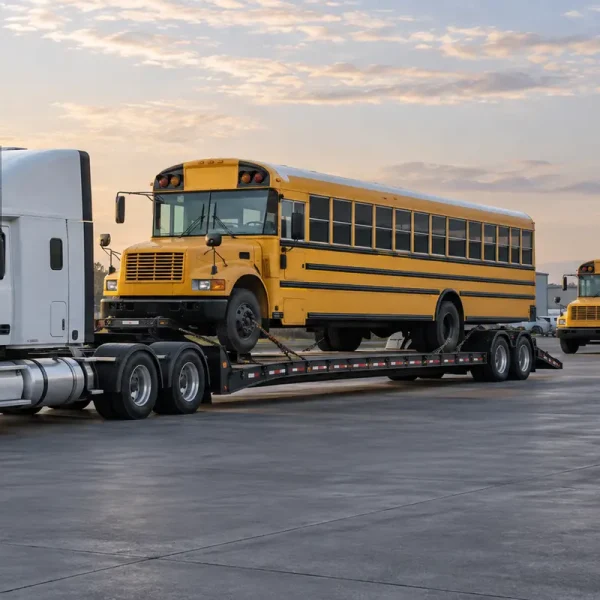
Decide Whether to Move Your Fleet Together or in Batches
A multi-vehicle project can have one destination and still need more than one transport arrangement. Vehicles may become available on different dates, need different loading equipment or arrive at a site with limited receiving space. Before requesting one price for the whole fleet, decide which units can realistically move together.
This guide helps you compare a combined move with staged shipments. For the service itself, see commercial bus and fleet vehicle transport.
Identify What Actually Makes a Group Compatible

Start with the proposed group, then check whether its timing, equipment and access requirements agree. Do not assume matching company ownership or a shared destination makes every unit suitable for the same trailer.
| Decision | Confirm before grouping |
|---|---|
| Ready date | Can every vehicle be released during the same pickup window, or is one still in service, under repair or awaiting release? |
| Equipment fit | Have the actual vehicle dimensions, weight, clearance and running condition been reviewed for the proposed transport equipment? |
| Pickup access | Can the assigned equipment reach and load at every required pickup location? |
| Receiving capacity | Can the destination accept the proposed arrivals, with appropriate access, staff and parking or unloading space? |
| Business priority | Does one vehicle need to arrive earlier, or can the entire group share the same planning window? |
Keep any unresolved item visible. A vehicle whose release date or loading condition is unconfirmed should not silently become the assumption behind the schedule for all the others.
Ask About Capacity Using the Actual Vehicles
Give the coordinator the vehicle list and the known details for each proposed group. A count such as “six vehicles” does not establish the number of trailers required. A mixed group of passenger cars, work vans and larger commercial vehicles needs an equipment review based on the actual units.
If the project consists mainly of vans, the commercial van transport page explains the details to provide for different van configurations. Report modifications and operating problems before the group is priced.
Compare a Combined Move With a Staged Plan

Request two defined arrangements when either approach could work: one based on the full group being ready, and one based on specified release batches. Keep the route, vehicle details and service requirements consistent so the comparison answers the scheduling question.
A Combined Group
Consider a combined group when the vehicles can share a release window and the destination can receive them as proposed. Ask whether the quote assumes one pickup visit, several pickup stops, one receiving appointment or multiple arrivals. One project quote does not automatically mean every vehicle travels on one truck or arrives together.
Separate Release Batches
Consider batches when a vehicle must remain in service longer, a unit needs separate equipment, or the receiving site wants arrivals spread out. Identify the vehicles in each batch and ask which arrangements have actually been confirmed.
Compare the total cost of the defined project as well as each batch price. Ask what would change if a vehicle is removed, delayed or reassigned. Consolidation may suit a project, but the number of vehicles alone does not prove a lower price or faster arrival.
Resolve the Late Vehicle Before It Holds Up the Plan
If one unit will not be ready, ask the coordinator to compare the practical options: keep the original group and review the schedule, move the ready units and quote the remainder separately, or revise the groups. Confirm the price, equipment and timing consequences before approving an option. Do not substitute a different vehicle without a new suitability review.
Keep the Approved Scope Clear as the Fleet Changes

Choose one person on your team to approve changes to the transport arrangement. Give the coordinator a dated version of the agreed group list, and identify additions, removals and changed release dates explicitly. This makes it possible to see which vehicles the current quote and schedule actually cover.
Compare the Written Project Terms
- Included vehicles and trips: Which units, pickup stops and delivery locations are included?
- Timing: Which windows are requested, which arrangements are confirmed and which arrival times remain estimates?
- Payments: Is the amount quoted for the full project, per batch or per unit, and when is each payment due?
- Changes: What needs a revised quote if a unit, location, condition or release date changes?
- Communication: Who approves a revision, and how will each pickup and arrival be confirmed?
Use the approved scope to review invoices and unresolved items after the move. If only part of the fleet has moved, keep the remaining units visible instead of treating the whole project as complete.
Planning a fleet move? Send the vehicle mix, locations, release windows and any proposed batches when you request a commercial fleet transport quote. The multi-vehicle fleet transport service page provides additional service details.
Should All Fleet Vehicles Travel Together?
Group vehicles when their release windows, transport equipment and receiving arrangements fit the same plan. When one of those conditions differs, ask for a staged option and compare the complete scope, timing and price before deciding. The assigned equipment and confirmed arrangements determine what is possible for the actual vehicles.
Need Help Planning Your Transport?
Tell us which vehicles are moving, where they are going and when each unit can be released. Include mixed vehicle sizes, operating problems and proposed batches so we can review the fleet arrangement.
For larger commercial vehicles and multi-unit moves, explore our commercial bus and fleet vehicle transport service.
For multi-unit commercial moves, see Multi-Vehicle Fleet Transport. If the project centers on cargo, passenger or work vans, review Commercial Van & Cargo Van Transport.