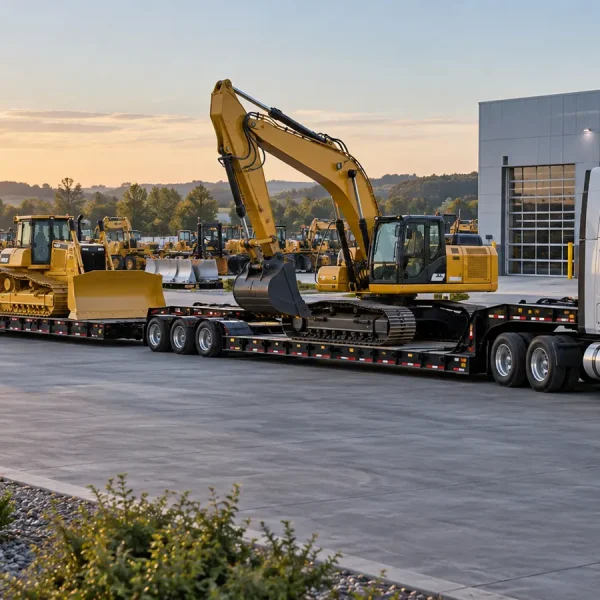
Visual Guide to Equipment Transport Dimensions
Describe the machine as it will travel, including attachments and its transport position.
CONFIDENCE IN EVERY MILE
Equipment dimensions are useful only when everyone understands what was measured. Identify the unit and its intended transport configuration first. Use the manufacturer’s instructions and qualified site personnel to establish that configuration; this guide is not a procedure for operating or repositioning machinery.
Three dimensions, one configuration
Length: include the ends that travel
Overall length is the end-to-end extent of the configured equipment. A bucket, blade, hitch or rear attachment can extend past the main body. State which attachments remain installed and list detached pieces separately. Do not quietly substitute the body length for the full shipment length.
Width: find the widest point
Tracks or tires may not be the widest part. Describe any wider blade, attachment or projection. If a component will be removed, confirm who will remove it, how it will travel and which dimensions describe the final arrangement. Do not assume removal is feasible simply because it would make a quote easier.
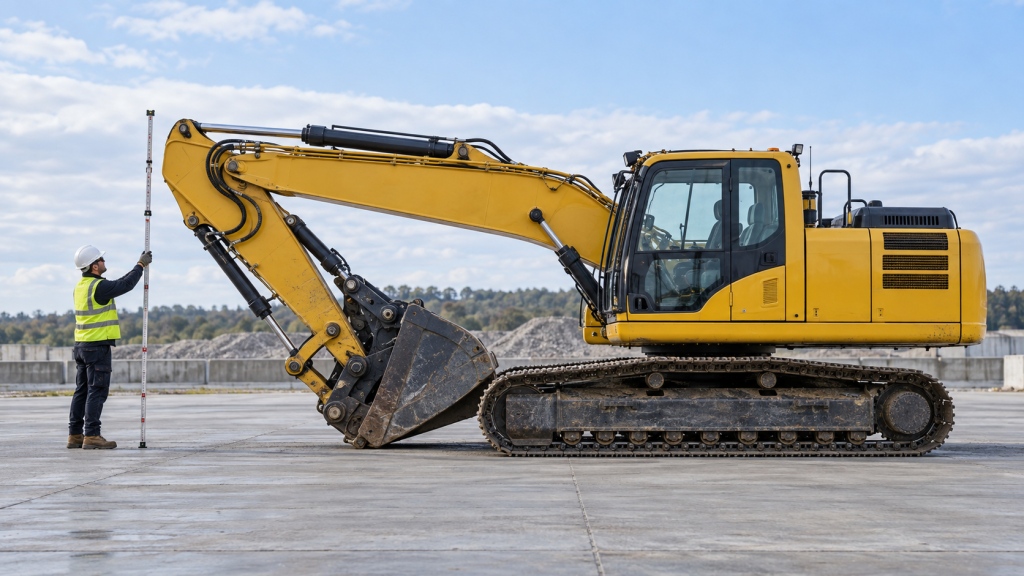
Height: identify the highest point
Record the equipment height from its supporting surface to its highest point in the agreed transport position. Cab height alone may not describe the entire unit. Photograph the measurement reference points and identify any configuration uncertainty.
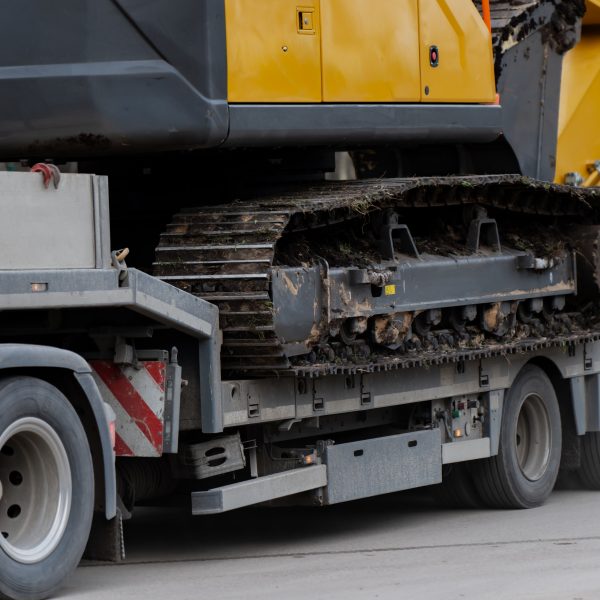
The machine’s height is not the same as its height when loaded on a trailer. The actual loaded arrangement, including the trailer and any support materials, requires carrier review. A machine-only measurement cannot certify route clearance or permit requirements.
Check specifications against the actual unit
Caterpillar’s 305 CR product specifications distinguish shipping-position measurements and note the effect of blade position on shipping length. Use the documentation for your exact model and configuration, then identify modifications or attachments that may change the published figures.
Dimensions are not the whole shipment
Provide a reliable weight source, operating condition, photos, attachment list and loading access. Say whether weight includes the attachments and other items being shipped. Mark uncertain information as uncertain instead of presenting a guess as a measured value.
For trailer planning context, see the trailer comparison guide. Learn how shipment assumptions affect quotes or request heavy equipment transport using the actual unit details.
Share this resource
You may share a link to this resource or quote a short excerpt with attribution to Elevation Transport Services. Please link to this original page so readers can find the current version.
Prepared by Elevation Transport Services. Updated October 2, 2026.