



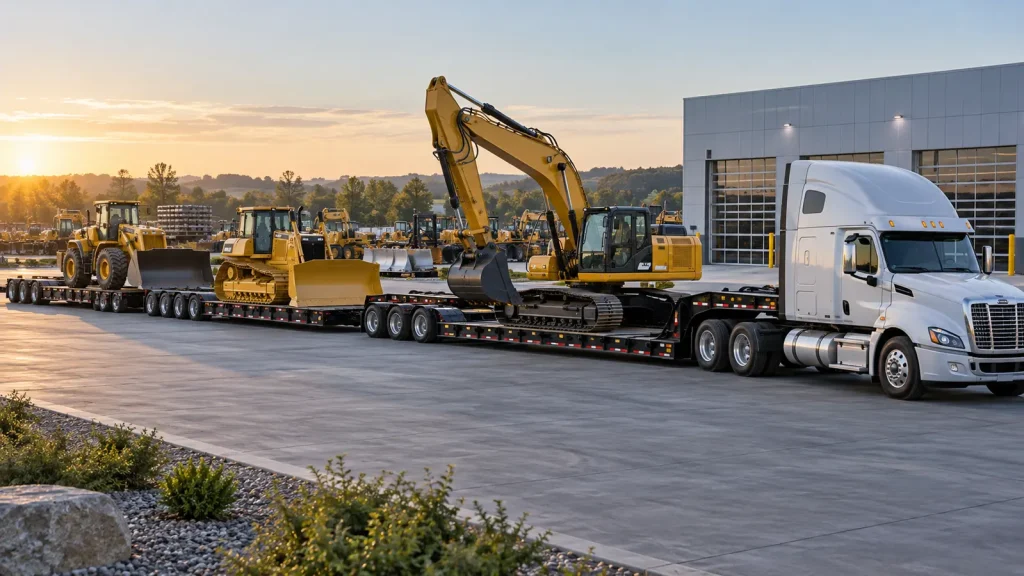
A construction equipment dealer shipping checklist should connect each machine to its stock number, actual configuration, release status and delivery instructions. Accurate inventory data helps match excavators, dozers, loaders, compact equipment and attachments to suitable transport equipment before a truck reaches the dealership.
1. Build One Manifest Row Per Machine
- Dealer stock number, serial number or PIN
- Year, manufacturer, model and machine type
- Actual length, width, height and transport weight
- Installed bucket, blade, ripper, counterweight or guard
- Loose attachments with separate dimensions and weights
- Running, steering, braking and hydraulic condition
- Pickup branch, release contact and gate hours
- Delivery location, receiving contact and unloading capability
Do not combine several machines into one description. Each asset should remain identifiable from quote through delivery.
2. Measure the Actual Dealer Configuration
Published manufacturer dimensions may describe a base configuration. A bucket, blade, ripper, cab guard, tire option, track width, counterweight or other installed equipment can change the shipping profile. Record the highest, widest and longest points in the intended transport position.
Attachments that will be removed still require deck space, weight capacity and securement access. State which attachment belongs with each machine so it arrives with the correct unit.
3. Confirm Operating and Loading Condition
Document whether the machine starts, moves under its own power, steers and brakes as designed. Identify dead batteries, hydraulic problems, locked tracks, flat tires, leaks, damaged components and control limitations.
If the equipment cannot load under its own power, disclose what assistance is available at both ends. A transport trailer should not be expected to replace an undisclosed crane, wrecker, forklift or repair service.
4. Prepare the Release Packet
Before dispatch, confirm that payment or internal transfer requirements are complete, the correct machines are accessible, keys are available and the carrier can be identified to the yard. Include stock and serial numbers, authorized pickup contacts, appointment instructions and any documents the driver must present.
5. Match Machines to Trailer Groups
Trailer selection depends on the complete machine and load profile. Deck height, usable deck length, axle capacity, loading angle and route restrictions all matter. A removable-gooseneck or lowboy may be evaluated for large or low-clearance machines, while compatible compact units may sometimes share equipment after combined weight, deck space and securement access are reviewed.
Grouping should be based on operational fit rather than unit count. Two machines may be unsuitable for one trailer even when their combined length appears to fit.
6. Verify Dealer and Customer Access
Confirm that each location has firm, level loading space, adequate turning room and no overhead or ground-level obstructions. A large dealership yard may accommodate specialized equipment while a temporary sales lot, urban branch or customer job site may not.
7. Separate Ready Units From Exceptions
For multi-machine moves, group units by origin, destination, readiness, transport profile and delivery priority. Machines awaiting paperwork, service or attachments should be tracked separately so ready inventory can move without avoidable delay.
Common Dealer Shipping Delays
- Dimensions copied from an incorrect machine configuration
- Attachments omitted from the quote
- Stock numbers not matched to serial numbers
- Machines blocked by other inventory
- Missing release authorization
- Customer sites without suitable unloading space
- Undisclosed non-running or hydraulic conditions
Plan a Construction Equipment Dealer Shipment
Review our construction equipment dealer transport service and broader heavy equipment transportation capabilities. Send the machine manifest, photographs, locations, access requirements and timing through the transport quote form.


