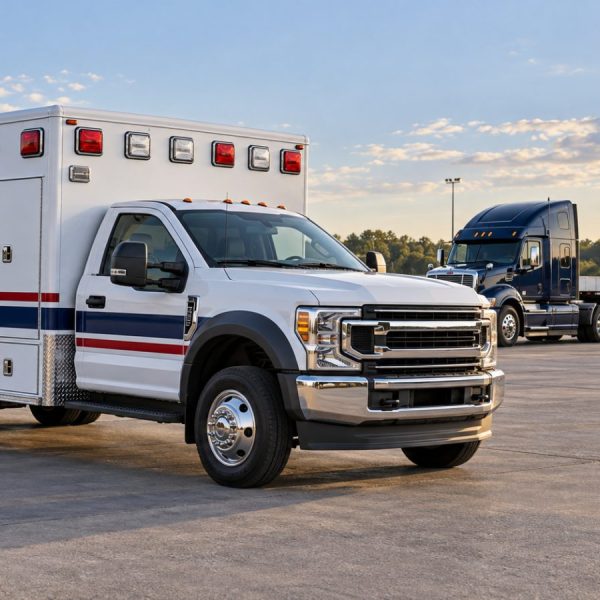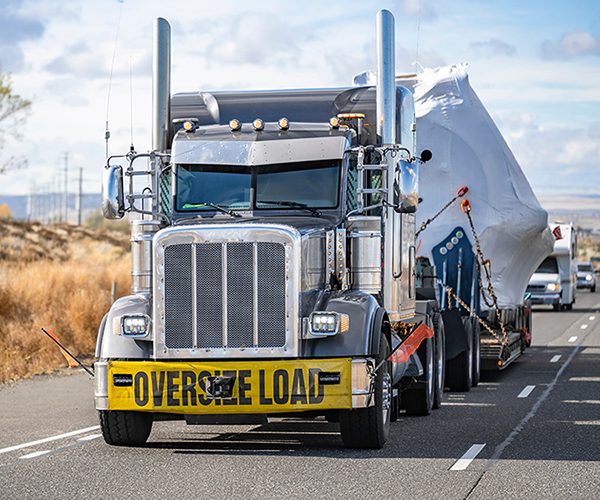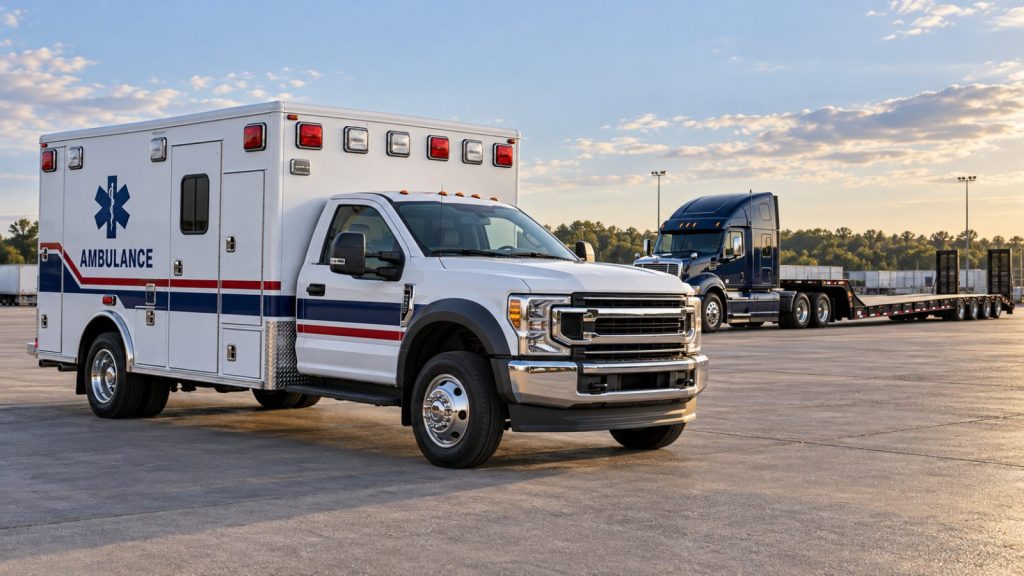
Featured image: AI-generated editorial illustration of an ambulance and transport equipment.
An RGN trailer is one option for shipping an ambulance, but it is not automatically required. The right equipment depends on the completed ambulance’s dimensions, weight, loading clearance and operating condition, along with the proposed trailer’s usable deck space and the planned route.
For a manufacturer, ambulance dealer or EMS organization arranging a move, the useful question is: “Has this trailer been reviewed for these specific units?” That becomes especially important when shipping two ambulances together or moving a vehicle with a different body configuration from the last shipment.
Here is how to have that conversation before finalizing your ambulance transport arrangement.
Why the completed ambulance matters
“Ford F-550 ambulance” identifies part of the vehicle. The completed body and its configuration provide the measurements needed to assess trailer fit.
Manufacturer specifications illustrate the difference. Braun publishes the following dimensions for two ambulance models offered on the Ford F-550 chassis:
| Completed ambulance model | Overall length | Wheelbase |
|---|---|---|
| Express Plus | 288 inches | 169 inches |
| Chief XL, Type I | 307 inches | 193 inches |
Sources: Braun’s Express Plus specifications and Chief XL specifications.
That is a 19-inch difference in overall length per vehicle. Across two units of the same respective model, the combined lengths differ by 38 inches. Those figures help explain why a chassis name alone cannot establish whether two ambulances will fit the proposed trailer.
Use these published examples to understand the variation. Confirm the actual units’ completed dimensions, including any equipment or projections that affect overall height, width or length.
What determines whether an RGN is appropriate?
RGN stands for removable gooseneck. Its design can be useful for certain loading and clearance requirements. Other trailer configurations may also be suitable when their dimensions, capacity and loading arrangement match the shipment.
Our RGN, lowboy and step-deck guide explains the basic trailer differences. For an ambulance shipment, the next step is reviewing the actual vehicle against the specific equipment being proposed.
That review should address three separate questions:
- Will the completed ambulance fit? Confirm overall length, width and height, including relevant rooftop equipment, body projections and accessories.
- Can it be loaded with suitable clearance? The review should account for wheelbase, ground clearance, rear overhang and the trailer’s loading transitions.
- Does the loaded combination work for the route? Confirm the loaded dimensions, weight distribution and any route or permit requirements that apply.
A trailer’s name or advertised capacity does not resolve all three questions. The carrier needs to confirm the proposed equipment for the shipment.
Can two ambulances travel on one trailer?
Possibly, but that requires a layout review for both completed vehicles.
Overall trailer length and usable space for the ambulances can differ. Deck sections, transitions and available clearances affect where a vehicle can sit. The plan also needs suitable space for loading and securement, with the carrier reviewing the resulting weight distribution.
Before accepting a two-unit arrangement, ask:
- Has the proposed trailer been checked against both units’ actual dimensions and weights?
- Does the usable deck arrangement accommodate each ambulance’s wheelbase and body overhang?
- Has the loading approach been reviewed for both vehicles?
- What would change if one unit’s configuration differs from the information originally provided?
If a manufacturer substitutes a different ambulance model, updates the body configuration or changes equipment before release, send the revised specifications to the transport coordinator. Have the arrangement reconfirmed before the shipment proceeds.
How does the ambulance’s condition affect the plan?
Explain whether each ambulance starts, drives, steers and brakes normally. Report any known mechanical issues, low components, tire problems or suspension conditions that could affect movement or clearance.
If a unit cannot move normally, the loading requirements need a separate review. Describing it as “nonrunning” or saying that a winch is needed may leave essential questions unanswered. The transport provider needs enough information to determine what equipment, preparation and qualified assistance are required.
Any mechanical preparation should follow the vehicle manufacturer’s instructions and be assigned to the appropriate qualified personnel. Confirm who will arrange that work and whether it is included in the agreed shipment scope.
Trailer questions to confirm before booking
| Confirm before finalizing | What the answer should establish |
|---|---|
| Completed vehicle specifications | The body configuration, actual dimensions and weight of each unit being shipped. |
| Proposed trailer | The equipment being evaluated, including usable deck space and relevant loading clearances. |
| Single-unit or two-unit arrangement | Whether the proposed layout has been checked for the specific shipment. |
| Operating condition | Any movement limitations and the agreed arrangements for necessary preparation or assistance. |
| Shipment scope | What the transport arrangement includes and which changes require a revised plan or price. |
Plan around the ambulances you are actually shipping
An RGN can be the appropriate choice when its configuration meets the shipment’s needs. The decision should follow a review of the completed vehicles, the proposed equipment and the route.
For recurring commercial vehicle transport, keep current specifications for each ambulance configuration. That gives the transport coordinator a reliable starting point when evaluating future moves.
Need to arrange an ambulance shipment? Send Elevation Transport Services the completed vehicle model, number of units, pickup and delivery ZIP codes, dimensions, weight and current operating condition. Include clear photos and any manufacturer specification sheets you have available. Request a vehicle transport quote so the shipment can be reviewed around the actual units and route, or call 800-251-9024.