

Planning data center equipment transport starts with the physical infrastructure, not the technology label. Transformers, generators, switchgear, cooling systems, structural steel, electrical equipment, batteries, fiber, copper, industrial skids, and sensitive computing hardware can all require different trailers, handling methods, and delivery plans.
nn
For contractors, manufacturers, equipment suppliers, utilities, and data center project teams, the practical challenge is making sure critical equipment is identified early, quoted from verified specifications, and matched to suitable capacity before the pickup window becomes urgent. Dimensions, weight, loading method, value, site access, and delivery sequence can all change the transport plan.
nn
Elevation Transport Services coordinates Data Center Equipment & AI Infrastructure Transport nationwide. This guide explains the equipment details buyers and project teams should prepare before requesting transportation.
nn
In this article:
Why Early Capacity Planning Matters for Data Center Equipment
nn
Large data center projects can require substantial volumes of construction material, power equipment, cooling systems, and technology. FreightWaves reported in April 2026 that the U.S. AI data center buildout could require an estimated 18.9 million incremental truckloads of construction materials and equipment between 2026 and 2031. The analysis identified generators, transformers, transmission equipment, structural steel, batteries, precision cooling equipment, semiconductors, and other infrastructure among the freight categories involved.
nn
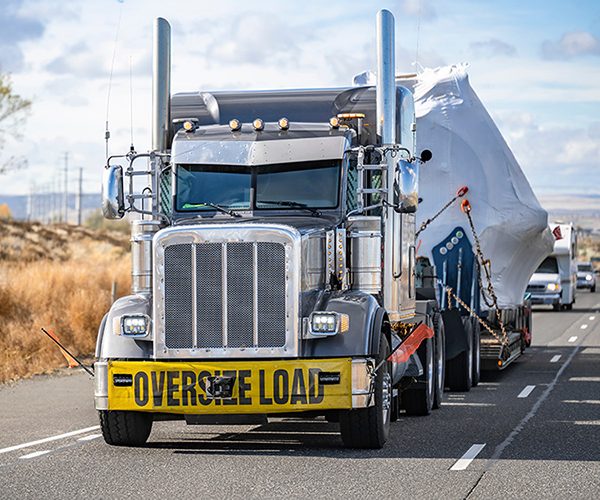
For transportation buyers, the useful takeaway is not the headline number by itself. It is that many of these shipments depend on open-deck or specialized equipment that cannot be substituted easily at the last minute. Actual dimensions, weight, loading method, route, and site access determine whether a flatbed, step deck, lowboy, removable-gooseneck trailer, multi-axle configuration, enclosed trailer, or another setup should be evaluated.
nn
The U.S. Department of Energy also identifies data center expansion and AI applications as major drivers of rising electricity demand. That infrastructure growth extends beyond the server room to the power, grid, backup generation, and cooling systems needed to support the facility.
nn
Industry references: FreightWaves data-center freight analysis and the U.S. Department of Energy Data Center Resource Hub.
nn
Equipment Creating Specialized Transport Demand
The most important transportation opportunities are not simply “data center freight” as one generic category. Different equipment classes create very different requirements.
Transformers, switchgear, and electrical systems
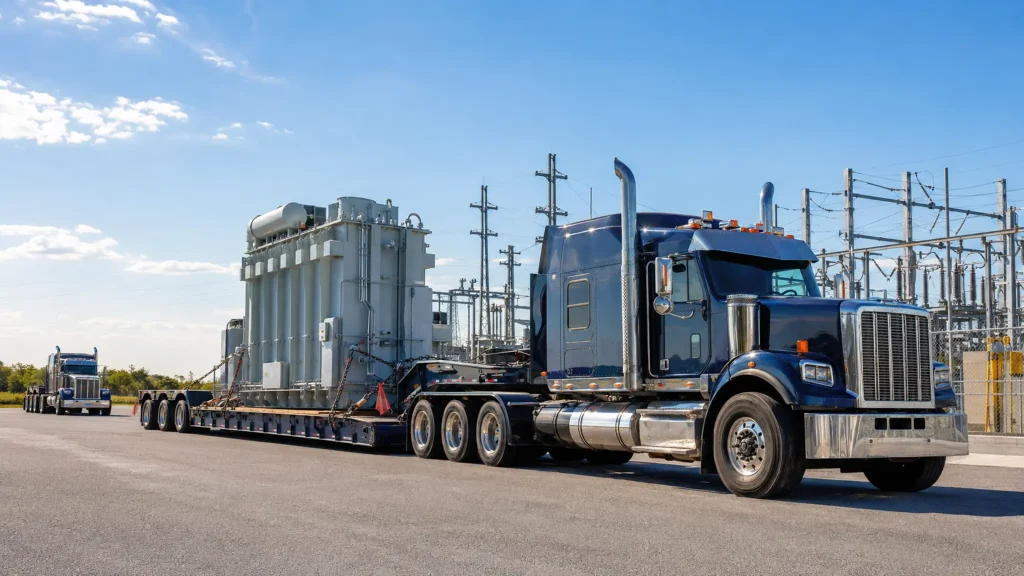
Power transformers, switchgear, substation components, power-distribution skids, cable reels, and related electrical equipment can range from relatively straightforward legal-size loads to very heavy or oversized units. Accurate shipping weight, dimensions, lifting points, center-of-gravity information when available, and pickup and delivery access should be confirmed before trailer selection.
Large transformers may require low-deck or multi-axle equipment, route review, permits, or specialized loading support. Smaller electrical systems can still require careful handling because of value, weather sensitivity, or installation schedules.
Industrial generators and backup power systems
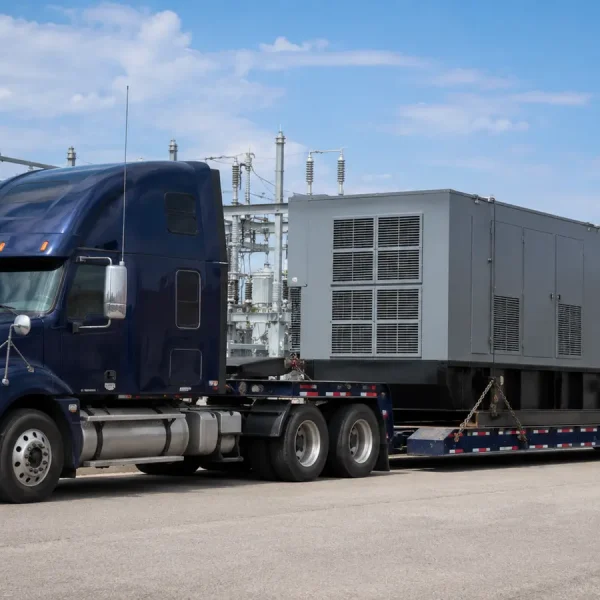
Large generators are a natural fit for specialized equipment transport. The quote should account for the entire generator package, including enclosure, sub-base tank, radiator package, batteries, switchgear, exhaust components, and accessories that may travel separately.
Our Industrial Generator Transport guide explains the trailer, loading, fuel-system, dimensional, and site-access details that can change the transport plan.
Cooling systems and mechanical equipment
AI computing creates significant cooling requirements. Data center construction and expansion can involve industrial chillers, cooling towers, dry coolers, pumps, heat exchangers, liquid-cooling skids, commercial HVAC equipment, and other packaged mechanical systems.
These loads may be tall, wide, top-heavy, weather-sensitive, or difficult to lift without the correct rigging points. A manufacturer’s specification sheet is useful, but the actual shipping configuration should still be verified before dispatch.
Construction equipment and site machinery
Before a data center becomes operational, the site itself may require excavators, loaders, cranes, lifts, telehandlers, compact equipment, and other construction machinery. These moves fall squarely within traditional heavy equipment transport, but project timing can make carrier availability and delivery coordination especially important.
Industrial skids and packaged systems
Prefabricated electrical, mechanical, pumping, cooling, and utility assemblies can create concentrated weight and unusual dimensions. They should be treated as individual engineered loads rather than priced from a generic freight class.
For broader machinery considerations, see our Industrial Equipment Shipping guide.
When Specialized Trailer Capacity Becomes the Constraint
Specialized transportation capacity is not interchangeable. A standard dry-van carrier cannot simply replace an RGN, lowboy, step-deck, or multi-axle heavy-haul configuration. As large construction programs absorb qualified open-deck equipment, the pool of available carriers can become tighter on certain lanes and during certain project windows.
This is especially important when a shipment has one or more of the following:
- Oversize width or loaded height
- High gross cargo weight
- Concentrated weight requiring additional axle capacity
- Ground-level loading requirements
- Crane or rigging appointments
- Restricted site-delivery windows
- Security or facility check-in requirements
- Multiple pieces that must arrive in a specific sequence
- High-value cargo that narrows the acceptable carrier pool
Shippers should therefore compare the actual load and lane rather than assuming that a national average rate reflects the capacity available for a specific transformer, generator, chiller, or equipment move.
How to Prepare a Data Center Equipment Shipment
The most effective way to control cost and reduce last-minute problems is to improve the quality of the shipment information before requesting a truck.
1. Verify the actual shipping dimensions
Use the equipment in its transport configuration, not only a catalog dimension. Include enclosures, radiators, control boxes, lifting eyes, exhaust components, attached skids, pallets, frames, or any other parts that change the overall length, width, or height.
2. Confirm the complete weight
For heavy equipment, the difference between dry weight, operating weight, and complete shipping weight can materially affect trailer selection. Accessories and separately shipped components should also be listed.
3. Identify the loading and unloading method
State whether the pickup and delivery locations have cranes, forklifts, rigging crews, loading docks, ramps, or equipment operators. If the cargo requires a crane appointment, the truck schedule should be coordinated around that appointment rather than treated like an ordinary open pickup window.
4. Review site access before the truck arrives
Large commercial projects can still have difficult truck access. Confirm gate width, turning radius, overhead clearance, ground conditions, staging areas, security procedures, appointment rules, and whether the receiving site can accommodate the trailer configuration being considered.
5. Identify oversize or route-sensitive loads early
Loaded width, height, length, weight, axle configuration, and states traveled can affect permit and routing requirements. Our Oversize Load Route Planning checklist covers the information that should be verified before dispatch.
High-Value and Sensitive Technology Freight Requires a Different Review
Not every important data center shipment is physically large. Servers, networking hardware, GPUs, semiconductor-related equipment, and other technology can carry far more value than ordinary general freight while still fitting inside conventional trailer dimensions.
FreightWaves has reported that modern technology freight is increasingly being treated as mission-critical infrastructure because a loss or damage event can disrupt an entire project schedule, not just create a replacement claim. That changes the questions a transportation provider should ask.
Depending on the shipment, the review may include:
- Enclosed or dedicated equipment
- Air-ride requirements
- Higher cargo-value review
- Appointment-controlled pickup and delivery
- Condition documentation
- Limited handling or transfer points
- Carrier verification appropriate to the cargo
- Security procedures supplied by the shipper or receiving facility
The goal is not to apply the same procedure to every technology load. It is to identify the shipment’s actual risk profile before assigning capacity.
What to Include in a Data Center Equipment Transport Quote Request
For a transformer, generator, cooling unit, industrial skid, electrical system, construction machine, or other specialized equipment move, provide as much of the following as possible:
- Equipment or cargo description
- Manufacturer and exact model when applicable
- Quantity
- Verified length, width, height, and weight
- Current photographs
- Manufacturer drawings or specification sheets when available
- Pickup and delivery addresses
- Site contacts and facility hours
- Pickup-ready date and preferred delivery window
- Loading and unloading resources
- Operating or non-operating condition when machinery is involved
- Permit, weather-protection, or high-value handling concerns already known to the shipper
- For several loads, the desired shipment and delivery sequence
What Transportation Buyers Should Do Next
nn
Data center construction is a technology project supported by a physical supply chain. Power equipment, cooling systems, construction machinery, electrical components, structural materials, and sensitive technology all have to reach the site in the correct condition and sequence before installation can proceed.
nn
The best preparation is straightforward: verify the cargo specifications, identify loading and unloading resources, review site access, disclose high-value or weather-sensitive requirements, and provide the required delivery sequence before capacity is assigned. Treating these moves as shipment-specific transportation projects helps reduce avoidable changes after dispatch.
nn
Planning a Data Center Equipment Move?
Elevation Transport Services coordinates nationwide transportation for transformers, generators, cooling systems, industrial equipment, electrical infrastructure, construction machinery, high-value technology, and other data center equipment that fits our specialized transport capabilities.
Visit our Data Center Equipment & AI Infrastructure Transport service page or call (800) 251-9024 to discuss the shipment specifications.