
John Deere equipment transport can involve everything from compact construction machines to large agricultural and harvesting equipment. The correct transport plan depends on the exact machine, dimensions, operating weight, attachments, loading method, route, and pickup and delivery access.
Elevation Transport Services coordinates nationwide heavy equipment transportation for contractors, equipment dealers, rental fleets, farms, commercial operators, and private equipment owners. John Deere is a Deere & Company trademark; Elevation Transport Services is an independent transport company and is not affiliated with or endorsed by Deere & Company.
How Should John Deere Equipment Be Transported?
John Deere transport planning depends first on whether the unit is construction equipment or agricultural machinery. Excavators, dozers, loaders, and backhoes create different trailer and loading requirements from tractors, combines, harvesters, and other farm equipment. Attachments, tires or tracks, shipping height, and seasonal timing can materially change the move.
Elevation Transport Services reviews the exact Deere model, dimensions, weight, attachments, operating condition, and pickup environment before coordinating transport. Construction machines may require low-deck or ground-loading equipment, while large agricultural units may need width, height, tire, header, or implement planning before dispatch.
John Deere Equipment We Coordinate
John Deere’s current U.S. construction lineup includes excavators, dozers, wheel loaders, backhoes, motor graders, skid steers, compact track loaders, crawler loaders, articulated dump trucks, and other construction equipment. Its agricultural lineup also includes tractors and harvesting equipment such as combines, cotton harvesters, and sugar cane harvesters. Transport requirements can vary substantially between those machine types.
John Deere Excavator Transport
Excavators should be quoted using the actual shipping configuration. Boom and stick position, bucket or attachment, counterweight, track width, overall height, operating weight, and ground clearance can all affect the trailer and route.
Smaller excavators may fit legal-size equipment configurations, while larger tracked machines often benefit from lowboy or removable-gooseneck equipment that allows loading from ground level. See our Excavator Transport Service guide for trailer and loading considerations.
John Deere Dozer Transport
Dozers should be measured with the blade, tracks, ripper, guarding, and other attachments in the intended shipping configuration. A blade or rear attachment can change legal width, length, weight distribution, or permit requirements.
For additional planning details, review our Bulldozer Transport guide.
John Deere Wheel Loader and Backhoe Transport
Wheel loaders and backhoes require accurate measurements that include buckets, forks, booms, outriggers, tires, and other installed equipment. Bucket width and overall height are especially important because attachments can push a machine beyond standard legal dimensions.
Related resources include our wheel loader transport service and backhoe transport service.
John Deere Skid Steer and Compact Track Loader Transport
Compact equipment is usually simpler to move than large earthmoving machinery, but model size, attachment width, operating weight, and loading access still matter. Buckets, forks, breakers, augers, and other attachments should be identified before dispatch so the quoted transport configuration matches the actual load.
See our skid steer transport service for additional planning factors.
John Deere Agricultural Equipment Transport
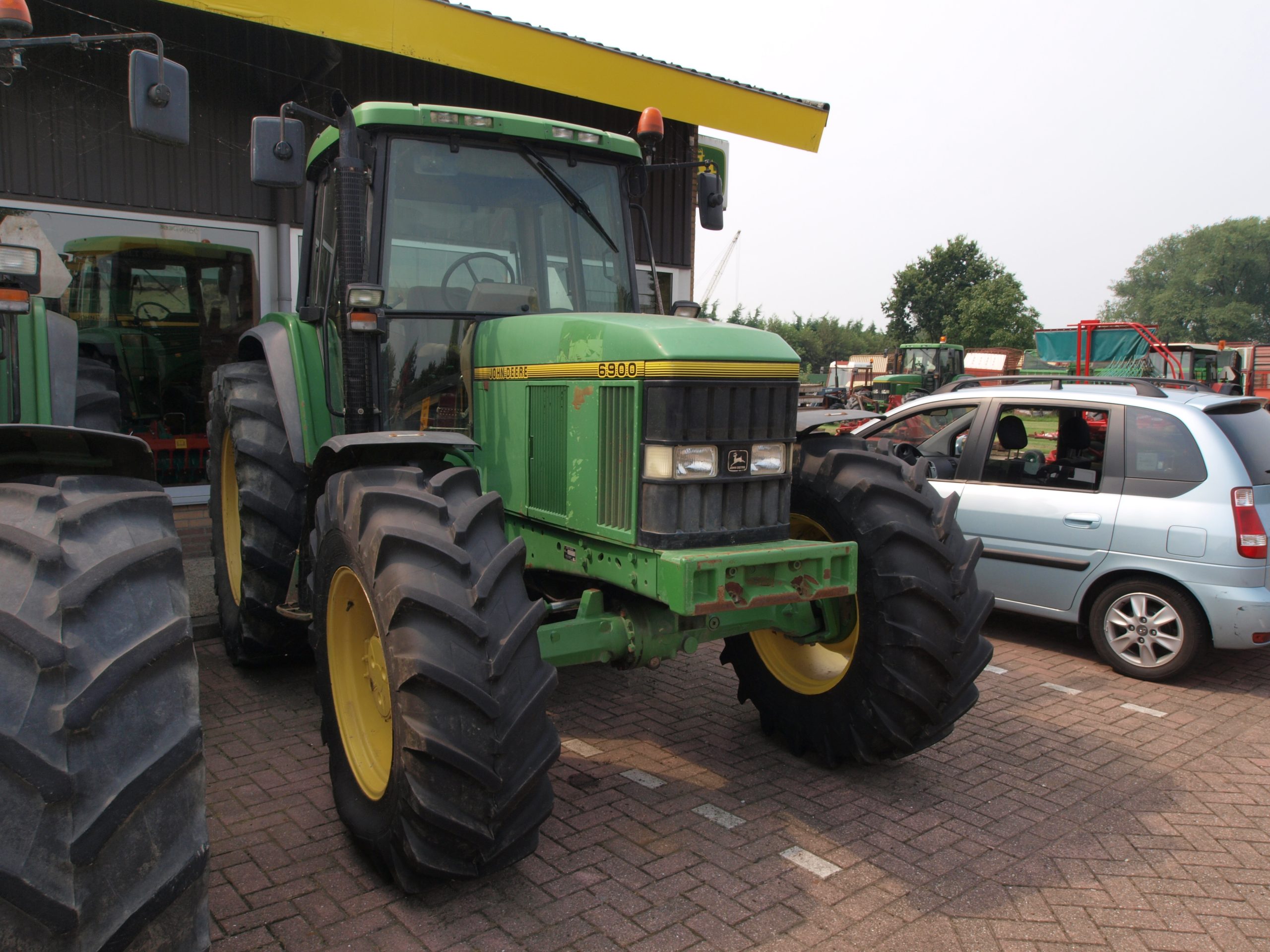
Agricultural equipment often presents a different transport profile from construction machinery. Tractors, combines, harvesters, sprayers, and other farm equipment may be tall, wide, fitted with large tires, or shipped with headers and attachments that require separate planning.
Tractor Transport
For tractors, provide the exact model, tire configuration, cab height, ballast, front loader or implement information, and operating weight. Dual wheels, loaders, attachments, and specialty tires can materially change the loaded dimensions.
Combine and Harvester Transport
Combines and harvesting machines can require low-deck equipment, oversize permits, route review, and separate handling for headers or other detachable components. Transport planning should use actual measurements rather than relying only on catalog specifications.
Our combine harvester transport service covers trailer selection, dimensions, loading, and route considerations in more detail.
Which Trailer Is Used for John Deere Equipment?
No single trailer works for every John Deere machine. Trailer selection is based on the complete equipment profile and route.
- Flatbed or step deck: May fit legal-size compact equipment and some tractors or attachments.
- Lowboy: Common for taller or heavier construction and agricultural machinery that benefits from lower deck height.
- RGN or removable gooseneck: Often considered for self-propelled tracked or wheeled machinery that can load from ground level.
- Multi-axle specialized equipment: May be necessary when operating weight or loaded dimensions exceed the capacity of standard configurations.
For broader trailer-selection guidance, review our RGN vs. Lowboy vs. Step Deck guide.
Why Exact Model and Attachment Information Matters
A transport quote is only as accurate as the machine information supplied. Two machines in the same product family may require different trailers because of attachments, tire or track configurations, counterweights, cabs, buckets, blades, headers, or other equipment.
Before requesting a quote, provide:
- Year, make, and exact model
- Overall length, width, and height in shipping configuration
- Operating or shipping weight
- All buckets, blades, forks, headers, loaders, rippers, or other attachments
- Running or non-running condition
- Ground clearance and loading limitations
- Pickup and delivery addresses and site contacts
- Photos from multiple angles
Dealer, Farm, and Fleet Equipment Moves
John Deere equipment may move between dealers, farms, rental branches, construction projects, storage yards, maintenance facilities, commercial facilities, and private buyers. Commercial locations can have release numbers, appointment windows, loading rules, security procedures, or limited tractor-trailer access.
When multiple machines are moving, send the complete equipment list at the start. Grouping the project by machine size, origin, destination, and timing makes it easier to evaluate transport capacity and avoid unnecessary back-and-forth.
What Affects John Deere Equipment Transport Cost?
Pricing is influenced by mileage, machine dimensions, operating weight, trailer type, permits when required, loading method, origin and destination access, carrier availability, and timing. Remote farms, job sites, or rural dealer locations may also affect available transport capacity.
For current planning factors, see our Heavy Equipment Transport Cost guide.
Request a John Deere Equipment Transport Quote
Send the exact John Deere model, dimensions, weight, attachments, photos, operating condition, pickup and delivery locations, and preferred pickup window. We will review the equipment and coordinate a transport plan around the actual machine and route.
Start with our Heavy Equipment Transport service page. For category-specific moves, visit Construction Equipment Transport or Agricultural Equipment Transport.
John Deere and Heavy Equipment Resources
- John Deere Construction Equipment
- John Deere Harvesting Equipment
- Caterpillar Equipment Transport
- Nationwide Heavy Equipment Transport
Need transport for John Deere machinery? Review our Heavy Equipment Transport service and request a quote using the exact tractor or equipment details.
Request a Quote for Your John Deere Equipment Request a heavy equipment transport quote with the exact machine, dimensions, condition, route, and timing.