Shipping a motorcycle across the country is easier when the transport plan is built around the bike—not just two ZIP codes. The year, model, dimensions, operating condition, modifications, pickup access and delivery access all affect the equipment and handoff plan.
ETS service scope: Elevation Transport Services coordinates motorcycles in enclosed transport equipment only. That policy applies to standard motorcycles, custom builds, collector bikes, scooters, dirt bikes, trikes and similar units. Start with the current motorcycle transport service details before requesting a quote.
Before You Request a Cross-Country Motorcycle Quote
A useful quote request gives the coordinator enough information to evaluate the motorcycle, the route and both locations. Gather these details first:
- Year, make, model and motorcycle type
- Overall length, width, height and approximate weight
- Running or non-running condition
- Whether the bike rolls, steers and brakes normally
- Sidecars, extended forks, oversized tires, lowered suspension, saddlebags or other modifications
- Pickup and delivery ZIP codes, location types and access restrictions
- Preferred timing and any firm release or receiving hours
Photos are especially helpful when a motorcycle is modified or its dimensions differ from factory specifications. Describe the bike as it will be presented at pickup, including any luggage or accessories that will remain attached.
Confirm Enclosed Equipment and Loading Needs
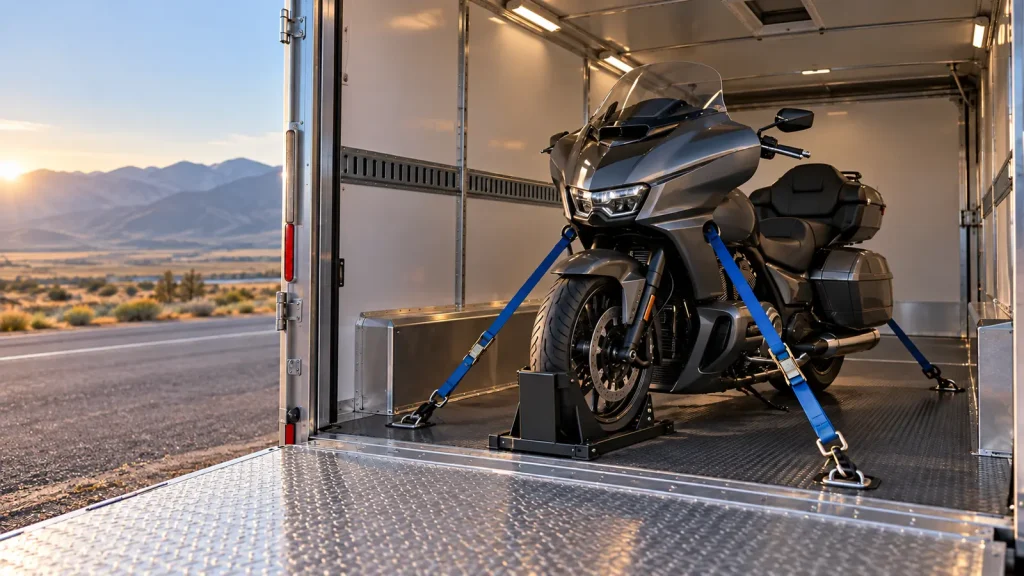
An enclosed trailer reduces direct exposure to weather and road debris, but “enclosed” does not identify every loading detail. The coordinator still needs to match the motorcycle with suitable entry clearance, loading equipment, floor space and securement arrangements.
A low motorcycle, trike, sidecar, long-fork custom or non-running bike may need a different loading plan than a standard running motorcycle. Disclose those differences before dispatch. For related high-value vehicle planning, review ETS’s enclosed transport approach.
Choose a Pickup Location the Trailer Can Use
Door-to-door service depends on safe, legal access for the transport equipment. A narrow residential street, low tree branches, steep driveway, gated entrance, parking restriction or limited turnaround area may require a nearby meeting point.
Before pickup, confirm:
- Gate hours, appointment rules and security procedures
- Whether a large enclosed trailer can enter, turn and exit safely
- A backup meeting location if residential access is limited
- The name and phone number of the person releasing the motorcycle
- Dealer, auction or storage-facility release documents
If someone else will release the bike, make sure that person has the keys, authorization and shipment details. The pickup contact should be reachable during the agreed window.
Prepare the Motorcycle Without Guessing
Follow the confirmed carrier instructions for fuel level, battery condition and alarm systems. Requirements can vary, so avoid relying on a generic rule found online.
Wash the motorcycle enough to make existing marks visible, then photograph both sides, the front, the rear and close-ups of existing damage. Remove loose accessories and valuables. Secure or remove detachable luggage, helmets, covers, electronics and riding gear. Disable alarms if instructed and provide a working key.
Report fluid leaks, steering locks, weak batteries, damaged tires or brakes, low ground clearance and other loading concerns before the pickup day. A condition that changes the loading plan should not be discovered when the trailer arrives.
Document the Pickup Handoff
Review the motorcycle with the driver before loading. The pickup condition record should describe existing damage and identify the correct unit. Compare it with your photos, correct any omission you notice and keep a copy of the signed paperwork.
Do not leave release questions unresolved. A dealer, private seller, auction yard or storage facility may require a buyer number, lot number, identification or written authorization. Confirm those requirements in advance rather than assuming the driver can resolve them at the gate.
What Affects Cross-Country Motorcycle Shipping Cost?
Cross-country motorcycle pricing is shaped by the route and distance, motorcycle dimensions and weight, running condition, loading needs, enclosed-equipment availability, pickup and delivery access, season and scheduling flexibility. A modified or non-running motorcycle may cost more to coordinate when it requires additional equipment or limits the compatible trailers.
A useful comparison looks beyond the total price. Confirm what information the quote is based on, what service is included, how schedule estimates work and whether the motorcycle details are complete. A low quote based on incomplete dimensions or an incorrect running condition is not a reliable comparison.
Plan Delivery Before the Motorcycle Leaves
Decide who will receive the motorcycle and verify that the destination can accommodate the transport equipment. If the named customer will not be present, authorize a responsible receiver and share the delivery instructions with the coordinator.
At delivery, inspect the motorcycle before signing the final paperwork. Compare its condition with the pickup photos and record. If you see a new concern, note it on the delivery paperwork and photograph it before the driver leaves. Keep the pickup and delivery records together.
Request an Enclosed Motorcycle Transport Quote
To plan a cross-country shipment, submit the motorcycle type, dimensions, condition, modifications, route, access details and preferred timing through the vehicle transport quote form. Accurate information at the start helps the coordinator evaluate the enclosed equipment and handoff plan before pickup.
Cross-Country Motorcycle Shipping Questions
Does a motorcycle have to run for enclosed transport?
Not always. A non-running motorcycle may be transportable when its rolling, steering and braking condition is disclosed and compatible loading equipment is available.
Can personal items stay with the motorcycle?
Remove loose personal property, valuables, riding equipment and detachable accessories unless the confirmed transport instructions specifically allow an item to remain.
Are pickup and delivery dates guaranteed?
Pickup and delivery timing is estimated. Weather, traffic, equipment availability, route conditions and carrier schedules can change during a long-distance shipment.