Rising diesel costs are putting transportation budgets under pressure. For equipment dealers, contractors, agricultural businesses and fleet managers, the practical question is how that pressure affects the next shipment—and what can be planned more efficiently.
The U.S. Energy Information Administration reported a national average on-highway diesel price of $6.529 per gallon for September 21, 2026, compared with $6.285 one week earlier. That is an increase of 24.4 cents per gallon. These are national retail averages including taxes, not the fuel price paid by every carrier. Source: EIA Gasoline and Diesel Fuel Update.
Higher fuel costs can put upward pressure on transport rates, but a diesel-price increase does not translate into an identical percentage increase in every shipping quote. Trailer requirements, route demand, available capacity and shipment readiness still matter.
Why diesel costs reach beyond the fuel pump
EIA explains that diesel prices reflect crude oil costs, refining, distribution and marketing, and taxes. Supply and demand conditions also influence pricing. For transport buyers, this means fuel costs can change even when the equipment being shipped and the requested route stay the same. Read EIA’s explanation of diesel-price factors.
A carrier has to account for the truck’s operating costs across its work, including positioning for pickup and finding the next load. More expensive fuel can make empty miles and poorly coordinated stops harder to absorb. The effect on a specific quote depends on the actual transportation plan.
A simple example of the fuel impact
Consider a hypothetical truck traveling 1,200 miles at an assumed 6 miles per gallon. It would consume 200 gallons. A $1-per-gallon increase would add $200 to its fuel expense for those miles.
1,200 miles ÷ 6 mpg × $1 additional cost per gallon = $200 additional fuel expense.
This is an illustration, not an industry fuel-economy average or an ETS quote. It excludes positioning miles, idling and other operating costs. On a shared carrier, that expense also is not automatically charged in full to each vehicle.
How different shipments are affected
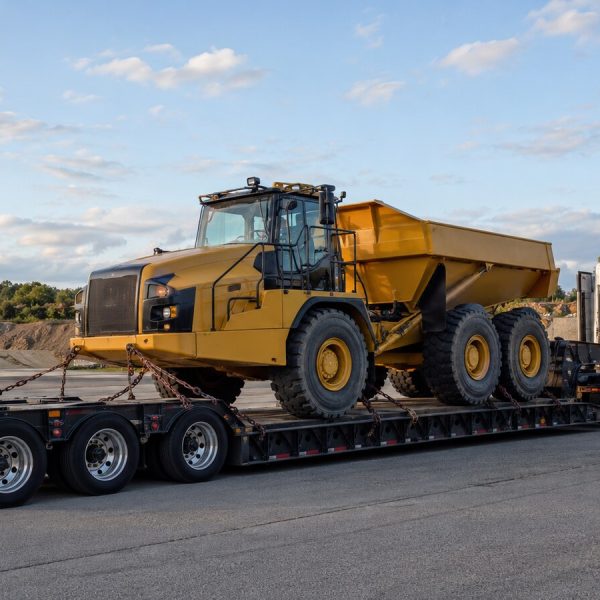
Heavy and construction equipment: An excavator, loader or agricultural machine needs a transport plan based on its actual dimensions, weight, attachments and loading condition. Fuel is one input alongside trailer suitability, route, loading support and any required permits. Accurate information helps avoid assigning equipment that cannot complete the pickup. Learn more about heavy equipment transport planning.
Commercial buses and fleets: Multiple units create opportunities to coordinate locations and pickup windows, but savings depend on vehicle sizes, readiness and available capacity. A complete manifest helps separate ready vehicles from units awaiting repairs or release documents. Review our commercial bus and fleet transport services.
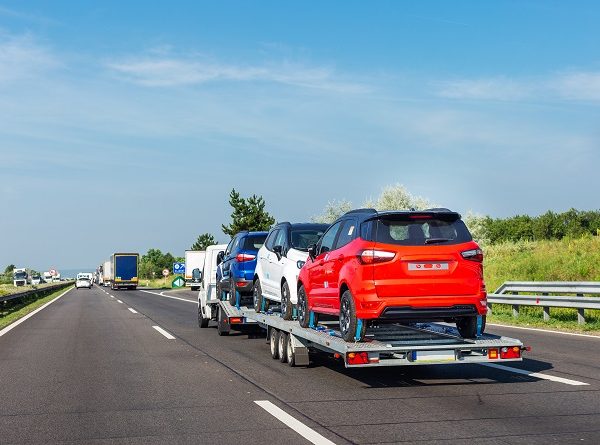
Enclosed and open auto transport: Fuel costs affect the truck moving the vehicles, including when the cargo is an electric vehicle. Carrier type, vehicle size, route and available space still influence the final rate. For a high-value vehicle, evaluate enclosed transport around protection and handling needs as well as price.
Five ways to make a transport budget more predictable
- Get a current quote before committing to a purchase or delivery deadline. An older estimate may reflect different fuel and capacity conditions. Ask how long the quote remains valid.
- Provide complete shipment details. Include locations, actual dimensions and weight, operating condition, attachments, photos and site restrictions. For a fleet, provide a unit-by-unit manifest.
- Offer a practical pickup window. Flexibility can create more routing options. Explain genuine deadlines early; flexibility does not guarantee a discount.
- Coordinate compatible moves. Ask whether units can be grouped or sequenced efficiently. Trailer capacity, weight distribution and loading requirements must support the plan.
- Have both sites ready. Confirm release paperwork, keys, loading assistance, access and receiving contacts before dispatch. A failed pickup can create avoidable costs regardless of fuel prices.
What to ask before accepting a quote
Ask whether the quoted total includes fuel, whether any separate fuel adjustment applies, and what specific circumstances could change the price. Also confirm what is included for loading, permits or additional assistance when relevant. Compare the same service scope across proposals rather than comparing headline prices alone.
Fuel-market movements should not be used to assume that an already agreed shipment price will change. The written quote and accepted terms govern the arrangement. Pickup and delivery dates should also be understood as estimates unless a specific written agreement states otherwise.
Plan your next move with complete information
Elevation Transport Services coordinates nationwide heavy equipment, commercial bus and fleet, high-value enclosed, and auto transport. Send the route, equipment or vehicle details, operating condition and preferred timing so the shipment can be evaluated on its actual requirements.
Request a transport quote or call 800-251-9024.
Fuel data reflects the EIA report for September 21, 2026. Prices and transportation availability can change. The calculation above is illustrative and is not a rate offer.