
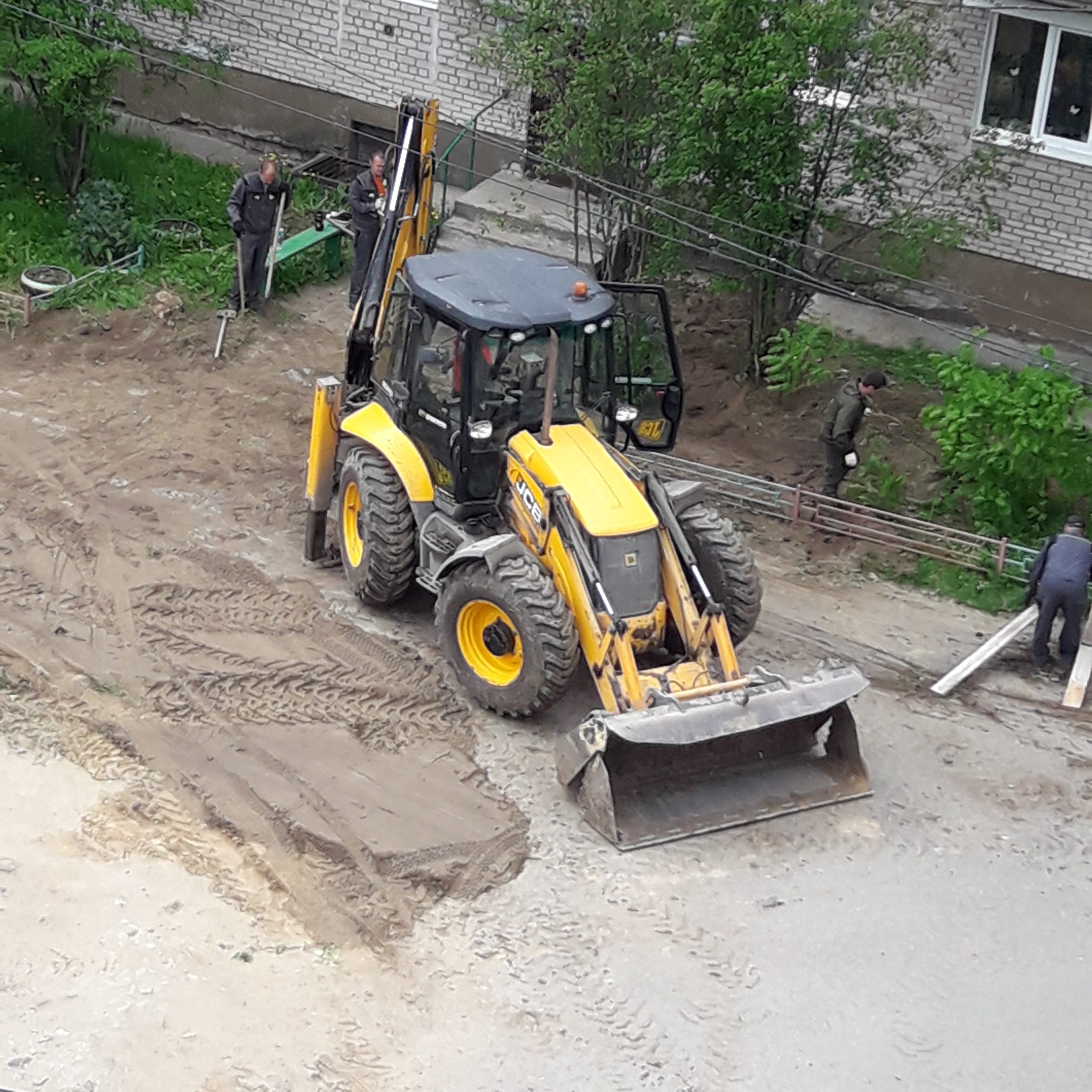
JCB equipment transport planning begins with the machine’s actual configuration, not the brand name alone. A JCB Teleskid with a telescoping boom presents a different loading profile from a conventional compact loader. A Loadall telehandler may arrive with forks, a carriage, a bucket, or another attachment. Backhoe loaders combine two working ends, stabilizers, and multiple positions that can change the shipping dimensions.
Elevation Transport Services coordinates nationwide transportation for JCB machines moving from dealers, rental branches, farms, storage yards, and jobsites. JCB is a trademark of JCB; Elevation Transport Services is independent and is not affiliated with or endorsed by JCB.
What Makes JCB Equipment Transport Different?
JCB equipment can require more configuration-specific planning because backhoe loaders, Loadall telehandlers, Teleskid machines, compact track loaders, and skid steers use different booms, stabilizers, forks, buckets, and attachment positions. Those features can change the shipping length, height, center of gravity, and loading approach.
Elevation Transport Services reviews the exact JCB model, boom or stabilizer position, installed attachment, operating condition, ground clearance, and site access before coordinating transport. That helps avoid choosing capacity based only on the base machine while overlooking the actual shipping profile.
Why the Exact JCB Configuration Matters
Two machines from the same equipment family can require different trailers because tires, tracks, cabs, booms, stabilizers, buckets, forks, counterweights, and optional attachments affect the loaded profile. The dimensions used for a quote should reflect the machine exactly as it will be presented at pickup.
Before requesting capacity, confirm the model plate, operating condition, attachment list, and shipping position. Dealer literature is useful for identification, but current photographs and pickup-site measurements help account for installed options and attachments.
JCB Teleskid and Powerboom Loader Planning
JCB’s Teleskid line uses a telescoping boom rather than the fixed lift arrangement found on a conventional skid steer or compact track loader. JCB skid steer and compact track loader families are also known for the company’s single-arm Powerboom and side-entry design. Those features give this equipment a recognizable profile, but transport decisions still depend on the individual machine and its shipping setup.
- Boom position: Confirm the boom is fully lowered and retracted into the approved transport position before measuring.
- Attachment width: Buckets, grapples, forks, breakers, and specialty tools can be wider than the machine or require separate deck space.
- Tracked versus wheeled: Confirm whether the unit is a compact track loader or skid steer so loading surfaces and machine weight are evaluated correctly.
- Entry and shutdown: The pickup party should know how to enter, start, operate, and secure the specific machine without relying on assumptions from a different loader design.
For general compact-loader trailer and access considerations, review our skid steer transport service.
JCB Loadall Telehandler Transport Intake
JCB offers an extensive Loadall telehandler range for construction, rental, and agricultural work. Telehandlers require a more detailed intake than simply listing “forklift” because boom length, tire configuration, stabilizers on applicable models, carriage type, and installed attachments can materially affect transport dimensions.
Provide photographs with the boom lowered, the attachment visible, and the full tire and cab profile shown. Identify loose forks, work platforms, buckets, jibs, or other tools that must travel with the machine. If an attachment will be removed, confirm who will remove it, how it will be lifted, and where it will sit on the trailer.
Measuring a JCB Backhoe Loader for Shipment
A backhoe loader should be measured only after the front bucket, rear boom, dipper, stabilizers, and any auxiliary attachments are placed in their intended shipping positions. A measurement taken while the rear boom is offset or the bucket is resting differently can produce an inaccurate overall length or height.
- Record the full length from the forward-most bucket point to the rear-most component.
- Measure the widest fixed or installed component, including the bucket or stabilizer profile as presented.
- Confirm the highest point with the boom secured for transport.
- Provide the operating or shipping weight from a reliable source for the exact model and configuration.
- State whether the machine starts, moves, steers, and brakes normally.
See the backhoe transport service for additional loading and trailer considerations.
Excavators, Wheel Loaders, and Other JCB Machines
JCB mini and tracked excavators should be quoted with the boom, stick, bucket, blade, track width, counterweight, and any auxiliary attachments accounted for. Wheel loaders require the actual bucket width, tire profile, articulation condition, cab height, and operating weight. Site dumpers, rough-terrain forklifts, tractors, aerial equipment, and compaction machines each require their own measurements rather than a category estimate.
Additional planning resources include our excavator transport guide and wheel loader transport service.
Pickup Conditions That Change the Transport Plan
Dealer and Rental Branch Releases
Confirm the release number, business hours, loading policy, and whether the location will remove or secure attachments. Some facilities require an appointment or will release equipment only to a named carrier.
Commercial Yard Pickups
Provide the stock or unit number, release documents, pickup deadline, yard hours, loading rules, and any storage-date restrictions. Do not assume facility personnel will operate or load a non-running machine.
Jobsites and Farms
Describe gate width, road surface, turning room, overhead restrictions, soft ground, and whether the trailer can enter and exit safely. A legal-size machine can still require a different pickup plan when access is limited.
Selecting Trailer Capacity Around the Load
Compact legal-size machines may fit a flatbed or step deck when deck height and loading access allow. Taller or heavier units may benefit from a lowboy. A removable-gooseneck trailer may be considered when a self-propelled machine needs to load from ground level. Axle configuration and permit requirements depend on the verified machine, trailer, route, and states traveled.
Use our RGN, lowboy, and step-deck comparison to understand the basic differences. Final equipment selection must be based on the actual shipment.
JCB Transport Quote Checklist
- Exact year and model from the identification plate
- Length, width, and height in the intended shipping position
- Reliable operating or shipping weight
- Wheeled or tracked configuration
- Running, steering, braking, and hydraulic condition
- Boom, stabilizer, bucket, fork, carriage, and attachment details
- Photographs from all sides
- Pickup and delivery addresses, hours, and contacts
- Loading and unloading assistance available at each location
- Release numbers, appointment rules, or access restrictions
Request a JCB Equipment Transport Quote
Send the exact machine information, photographs, attachment list, route, site-access details, and preferred pickup window. Elevation Transport Services will evaluate the load and coordinate transportation around its verified requirements.
Start with our nationwide heavy equipment transport service page or submit the specialized transport quote form.
Official JCB Product References
- JCB skid steer loaders and Teleskid information
- JCB compact track loader range
- JCB Loadall telescopic handlers
Need to transport JCB equipment? Start with our Heavy Equipment Transport page and submit the machine specifications for a project-specific quote.
For backhoes, excavators, telehandlers, and related jobsite machinery, review our construction equipment transport service overview.
Request a Quote for Your JCB Equipment Request a heavy equipment transport quote with the exact machine, dimensions, condition, route, and timing.