


A transit bus transport checklist should begin with the vehicle profile, not the pickup date. Low-floor construction, long overhangs, kneeling suspension, rooftop equipment, battery enclosures and limited ground clearance can determine whether a bus fits the proposed loading and route plan.
1. Identify the Exact Transit Bus
Provide the year, manufacturer, model, VIN or agency unit number, full length, width, height, approximate weight and wheelbase. Manufacturer literature is a useful starting point, but transportation should be planned from the bus as it sits at pickup. Bike racks, mirrors, rooftop HVAC, antennas, battery systems and other installed equipment may change the transport profile.
2. Describe the Operating Condition Precisely
“Non-running” is not enough information for carrier selection. Confirm whether the bus starts, builds air pressure, releases its parking brake, raises or kneels, rolls, steers and brakes. Identify flat tires, locked wheels, disabled suspension, fluid leaks, collision damage and any condition that limits loading.
A bus that does not start but rolls and steers may require a different loading plan than a vehicle with locked brakes or a collapsed air suspension. Current photographs and a short video can help document the condition before dispatch.
3. Verify the Pickup Release
- Match the VIN, auction lot number and agency asset number.
- Confirm payment and release documents are complete.
- Record the releasing contact and facility hours.
- Identify appointment, gate and driver-identification requirements.
- Confirm keys are available and the bus is accessible.
- Disclose whether loading assistance is available.
Public agencies and auction yards often have limited release windows. The transport should not be dispatched until the facility confirms that the correct unit is ready.
4. Review Loading and Site Access
The pickup and delivery sites need enough firm, level space for the proposed tractor and trailer to enter, align, load and exit. Low branches, overhead wires, security gates, narrow turns, soft shoulders and parked fleet vehicles can prevent safe access.
For a disabled bus, identify whether a wrecker, winch, forklift or other qualified loading assistance is required. That assistance should be arranged before the transport equipment arrives.
5. Evaluate Trailer, Driveaway and Route Factors
Roadworthy transit buses may be evaluated for driveaway service when registration, insurance, mechanical condition, customer requirements and the route allow it. Trailer transport may be appropriate for disabled, unregistered, retired, newly purchased or condition-sensitive units.
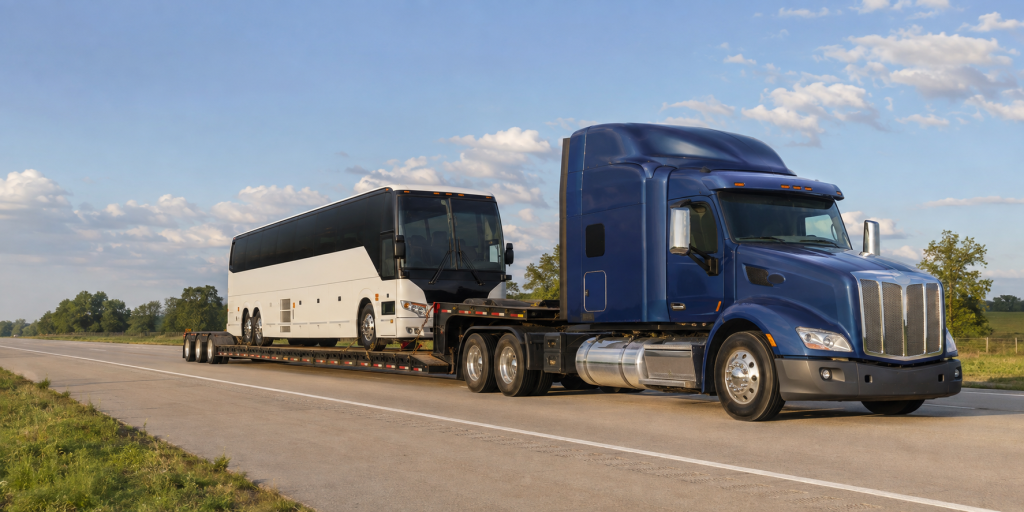
When trailer transport is considered, the complete loaded height, weight, axle placement, overhang and approach angle must be reviewed together. Lowboy or removable-gooseneck equipment may be evaluated for certain large or low-clearance buses. Route clearances and any applicable permit requirements depend on the actual loaded configuration.
6. Prepare a Manifest for Multiple Buses
For a fleet project, create one row for every bus. Include the VIN, unit number, dimensions, condition, location, destination, release status and priority. Separate ready units from exceptions so one missing release or disabled vehicle does not delay the complete project.
Common Transit Bus Pickup Delays
- Unverified overall height or rooftop equipment
- Air suspension that will not raise
- Parking brakes that cannot be released
- Missing keys or auction releases
- Inaccurate lot and VIN information
- Limited facility hours
- No loading assistance for a disabled bus
- Insufficient turning room for transport equipment
Request a Transit Bus Transport Review
For vehicle-specific planning, review our transit bus transport service and broader commercial bus and fleet transportation capabilities. Send the bus specifications, condition, photographs, locations, release requirements and timing through the transport quote form.